

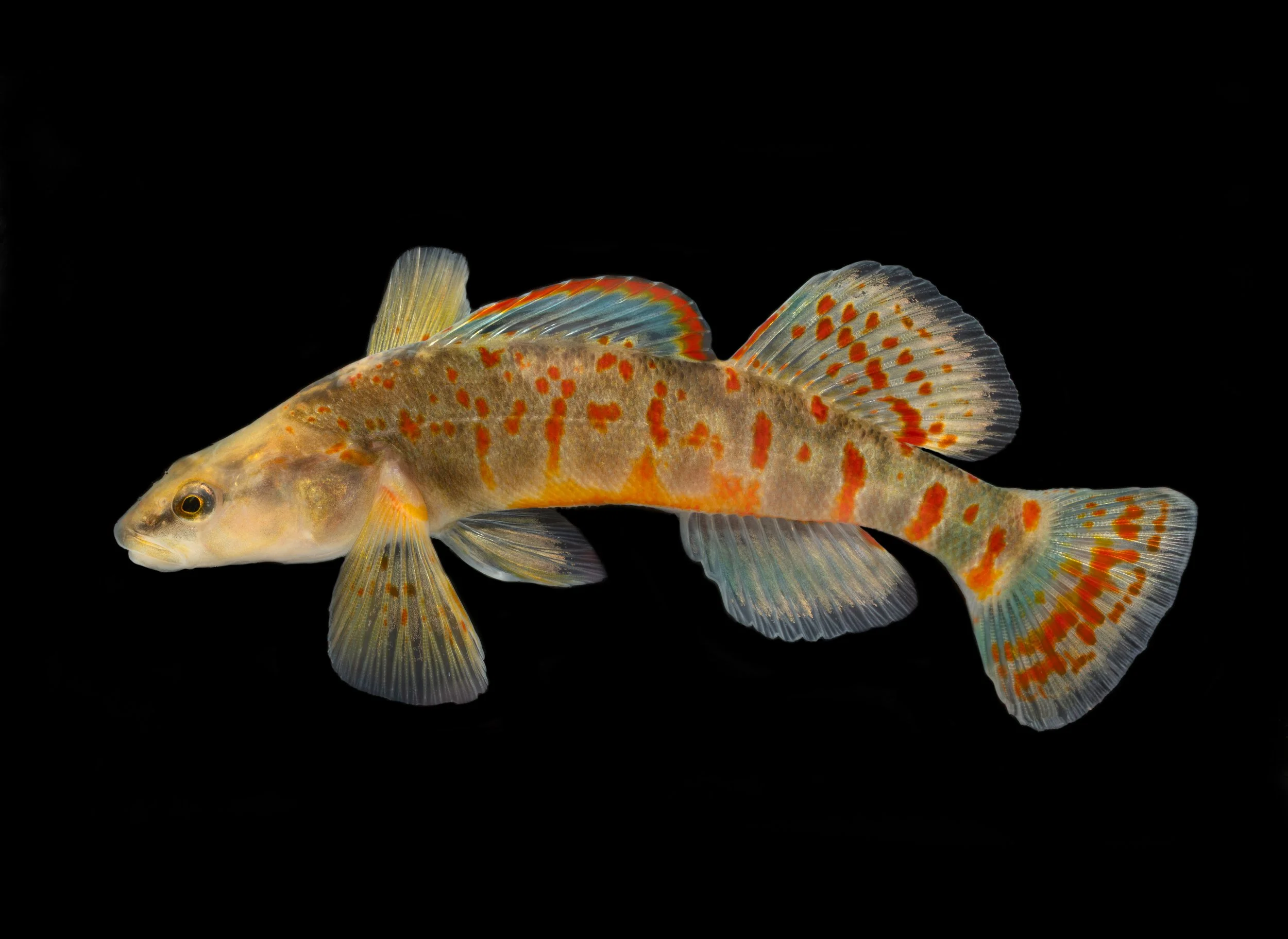
Image by Enchanting Ectotherms
Cumberland Arrow Darter | Etheostoma sagitta
-
With its pointed snout and long, streamlined body, the Cumberland Arrow Darter looks like it was built for adventure. This sleek little fish is perfectly designed for its yearly journey through cool mountain streams, moving with purpose as spawning season approaches.
The Cumberland Arrow Darter (Etheostoma sagitta) is a true local treasure. Found only in the upper Cumberland River drainage of southeastern Kentucky and eastern Tennessee, it exists nowhere else on Earth. These fish call clear, cool upland streams home—especially those winding through quiet, forested hillsides where shade keeps the water cold and clean.
-
From March through May, the Cumberland Arrow Darter enters its most dramatic season. Males transform from subtly patterned stream dwellers into living bursts of color, using vibrant displays to attract a mate. Blues, greens, scarlets, and oranges shimmer as they move over the gravel, turning an ordinary stream bottom into a surprisingly colorful stage.
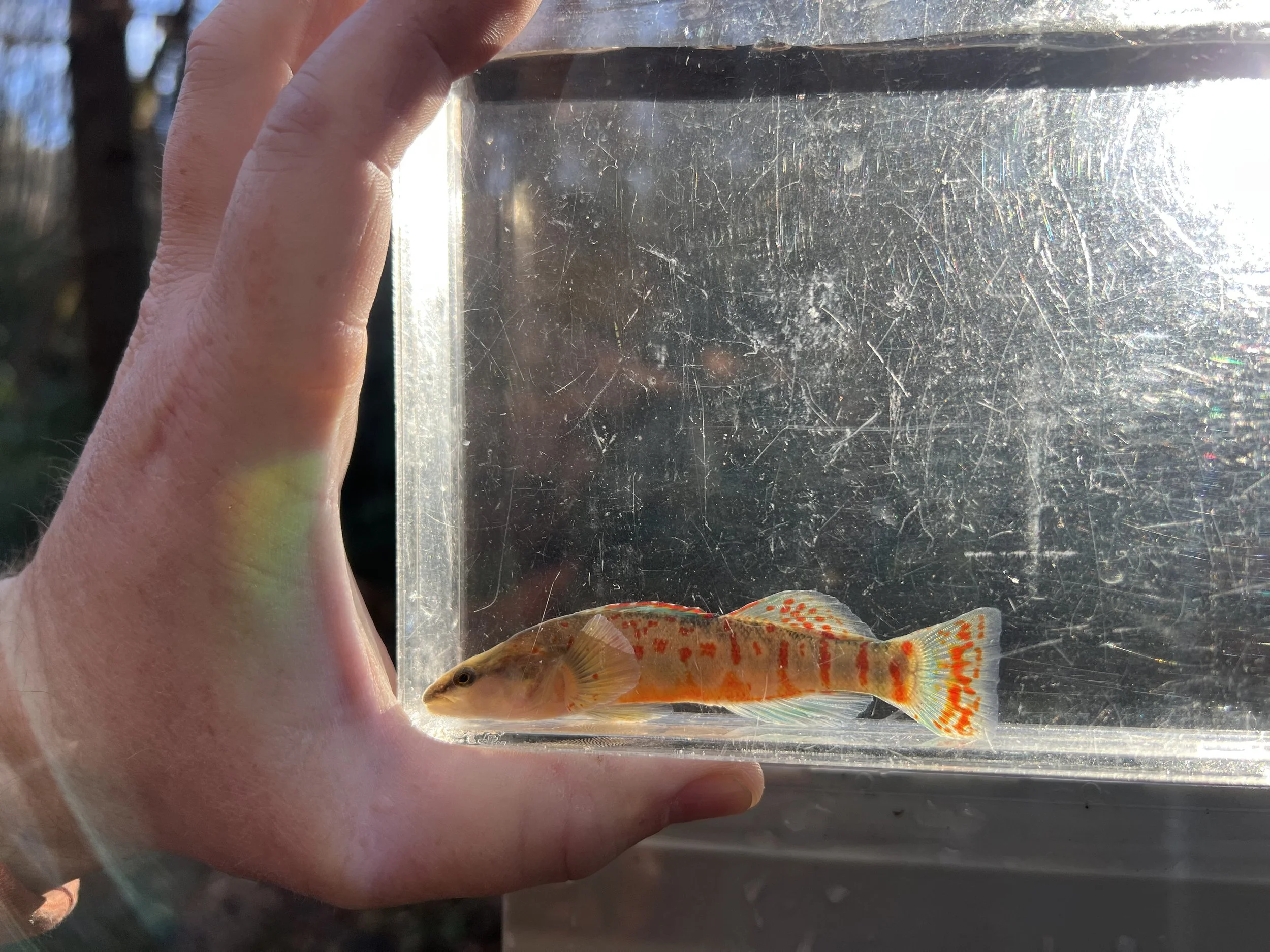
At just under five inches long, the Cumberland Arrow Darter is one of the larger darters. Its slender body, long snout, and large mouth give it an almost arrow-like appearance. Normally, its coloring blends beautifully with the streambed—soft straw yellow or pale green, marked by gentle saddles and bold side blotches that sometimes resemble letters like W or V. During spawning season, though, males become impossible to miss, glowing blue-green with fiery red and orange accents along their bodies and fins. Females stay much more understated, their muted tones helping them stay hidden and safe.
-
The Cumberland Arrow Darter is considered at risk, not because it’s weak, but because it’s picky. It depends on clean water, loose gravel, forest shade, and undisturbed stream channels. When those conditions disappear, so does the fish.
Surveys across Kentucky have revealed something encouraging: Cumberland Arrow Darters tend to stick around in streams that also support Blackside Dace, another sensitive species. They’re also more likely to persist in publicly protected watersheds, where land use is limited and streams are less disturbed. These protections help keep water cool and clean—exactly what arrow darters need to survive.
-
Protection helps, but it isn’t always enough. Davis Branch, once home to one of the strongest Cumberland Arrow Darter populations, sits entirely within Cumberland Gap National Historical Park. Over time, the loss of natural predators allowed beaver populations to grow, and their steady work transformed the stream—softening its flow, covering clean gravel, and opening the forest canopy above.These changes made the habitat unsuitable, and Cumberland Arrow Darters haven’t been seen there since 2007.
It’s a quiet reminder of just how finely balanced stream ecosystems can be.
-
Davis Branch plays an important role in restoring Blackside Dace and Cumberland Arrow Darters, and keeping the stream healthy means finding the right balance between wildlife and habitat needs. Beavers will continue to live in areas they already occupy, but new dam-building will be gently discouraged in the free-flowing sections of the stream where these fish are being reintroduced.
Both the restocking portion of Davis Branch and upper portion of Little Yellow Creek will be checked routinely for new beaver activity. If small dams form and create ponded areas, NHP wildlife officials will carefully remove dams. Beavers will not be trapped or relocated—these efforts simply guide where activity happens so that fish and beavers can successfully share the watershed.
This approach helps protect clean, flowing water while respecting the natural role beavers play in the landscape, supporting a healthier stream for wildlife and the community alike.
-
The Cumberland Arrow Darter may be small and easy to miss, but its story is a powerful one. Its presence tells us a stream is healthy, shaded, and clean. Protecting this fish means protecting the forests, waters, and wild places that make Kentucky special.
Sometimes, the most important stories in conservation aren’t loud or flashy—they’re quietly swimming beneath the surface, waiting for us to notice.
Status: IUCN: Not Listed; USFWS: Not Listed
CFI Status: Propagated starting in 2026 for range expansion in the Cumberland
Gap National Historic Park. (What do these terms mean?)
Native Range
Upper Cumberland River drainage southeastern Kentucky and eastern Tennessee.
Threats
Sedimentation, deforestation, impoundments, climate change, mining, habitat fragmentation. What do these terms mean?



Spawning Habitat Preferences: Late winter to spring spawners, typically from mid March-May. Known as a spawning migratory species where adults traverse great distances up first and second order streams for spawning.
In Partnership With: Cumberland Gap National Historical Park and USFWS