Conservation Round-Up
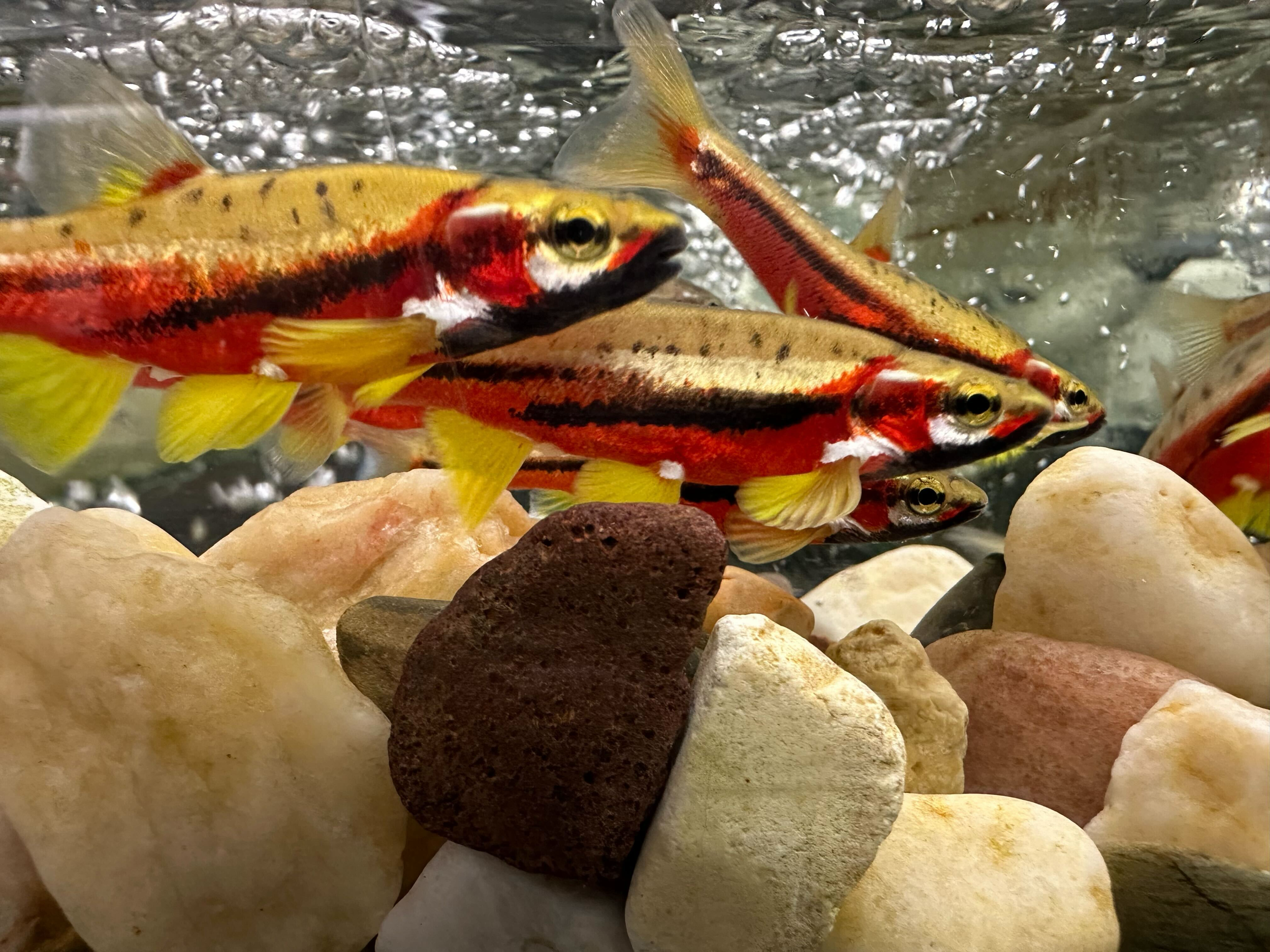
Tennessee Dace (Chrosomus tennesseensis); photo by Conservation Fisheries
Another Successful Year!
The end of the year is always bittersweet. In the spring and early summer we observe spawning of all of the species in our care, and spend the next several months collecting eggs and raising baby fish. Throughout the late summer and fall we are releasing several hundreds of these baby fish, now big enough to often be tagged and sent home to their native waterways. By the year’s end, the majority of our inhabitants earlier in the year have left us for the cool, flowing waters from Southern Appalachia and beyond. The fruits of our labor are hatched and gone before we know it.
One of the best parts of this time of year, though, is taking a look at the year’s successes. Sometimes a species has a tough year, and we don’t see much production. This could be because the breeders were a bit too old, or the fish didn’t quite sync up during a temperature change, or something that we altogether haven’t landed on being the cause. But more often than not we get to look back at how bountiful the year was, and think about the thousands of juvenile fish we were able to release to the wild. This year we produced over 18,700 fish and released or transferred about 15,800 of those to the wild for species restoration. Some of our highlights include:
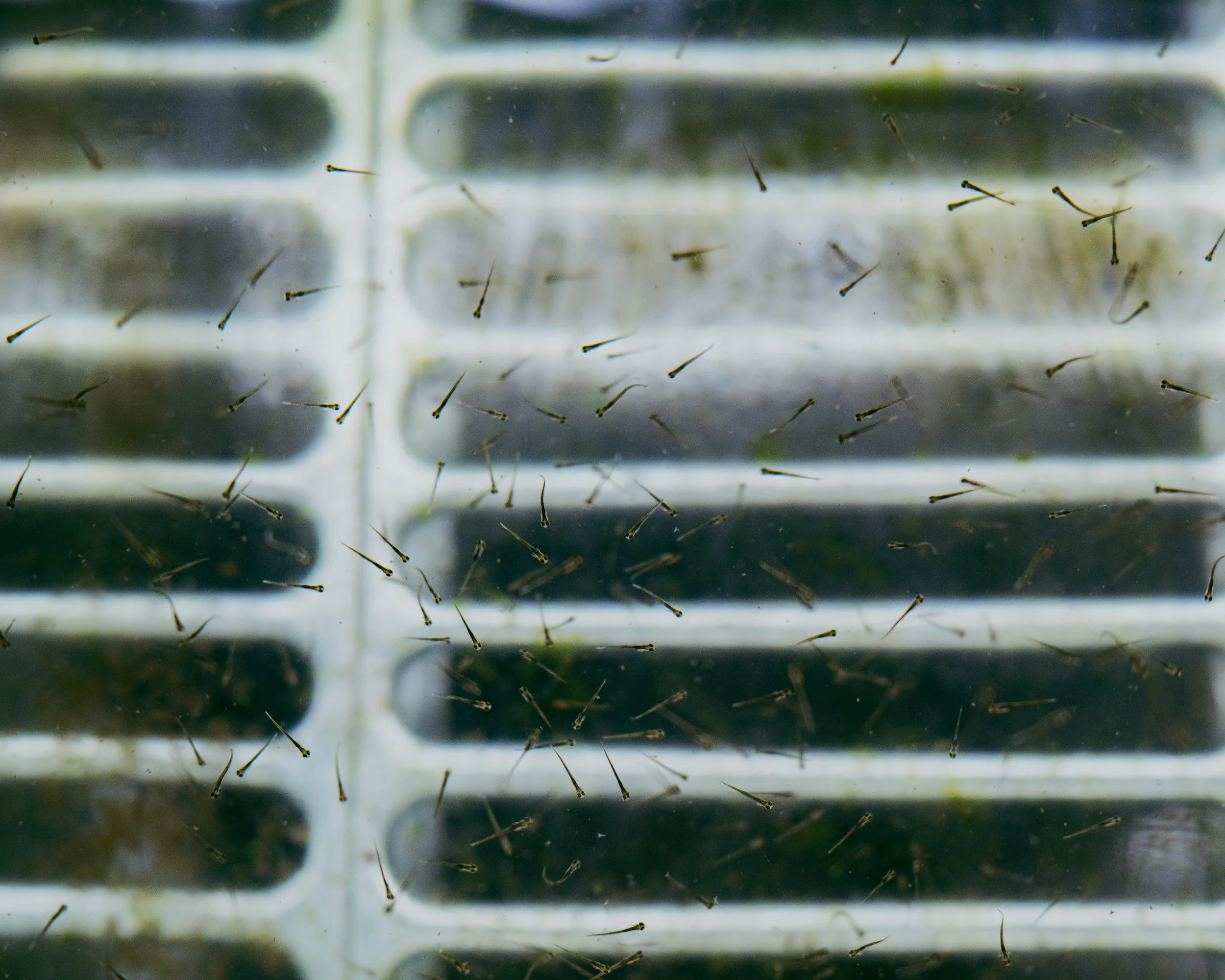
Larval Tennessee Dace
Blotchside Logperch: 542 to Tennessee mountain streams for restoration
Spotfin Chubs: 7,082 as a part of a decades long reintroduction project in middle Tennessee
Tennessee Dace: 6,417 split between two streams that have undergone habitat restoration in the Cherokee National Forest
Barrens Topminnows: 720 produced to grow-out at our satellite facility at Dale Hollow National Fish Hatchery
Buck Darter: 358 for our last release to a watershed in Kentucky over a 10-year period
Roanoke Logperch: 432 for our first year of propagation for continued recovery after they were delisted from the Endangered Species List
We had a great year in 2026 working with these fishes, and are looking forward to what the 2027 season will bring!
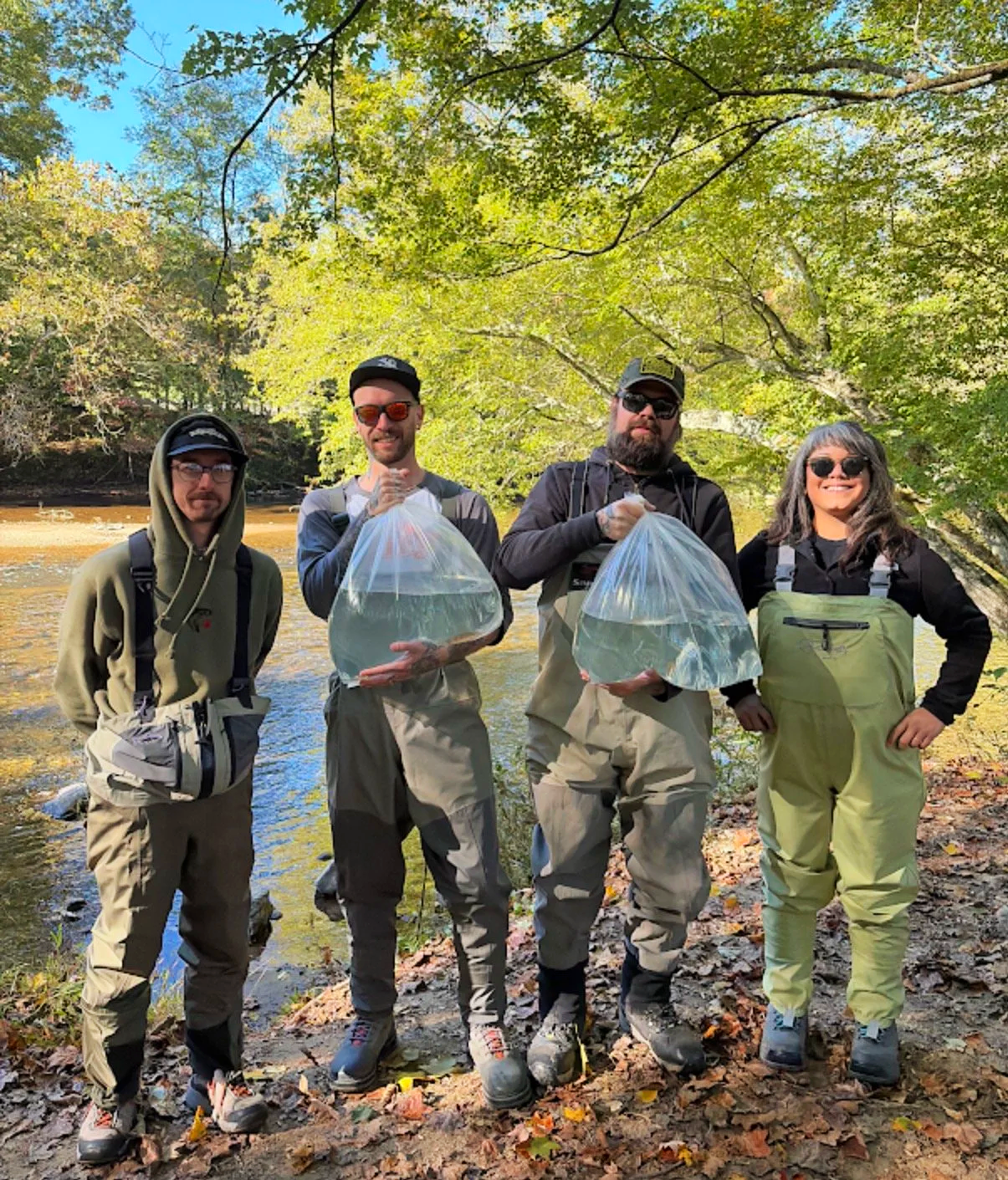
Saint Tattoo Volunteer Day; photo by Aster Treat
Volunteer Program
Thanks to all of our volunteers for a fantastic fall volunteering season and to everyone who spent their time with us this year caring for the fishes! Our next volunteer applications will be for the spring season, opening in early January with the volunteering term running from February through April. Anyone who would like to volunteer can visit the Volunteer Program page of our website to apply!
We’re also thrilled to be continuing to offer internship focused volunteer opportunities as an extension of our Volunteer Program in partnership with the University of Tennessee, Knoxville and Tennessee Technological University in Cookeville. As we build our Internship Program, students are able to obtain class credit while working at our facilities. At this time all internship-focused opportunities are filtered directly through professors at UTK and TnTech. We’ve recently interviewed several students for our spring terms and look forward to adding these folks to our team!
We were also so stoked for our friends at Saint Tattoo to volunteer with us for a day to release some of our Blotchside Logperch back to their source stream! Nothing better than a work day out on the water with friends that are as excited about fish as we are.
Save the Date
November 6th - ZooKnoxville’s Whimsy in the Wild Fundraiser for CF
Step into a storybook evening at Ancient Lore Village for A Conservation Tale: Whimsy in the Wild —a unique fundraising event supporting the Conservation Fisheries' Hellbender Project.
Surrounded by whimsical charm and natural beauty, guests will embark on a journey of purpose, learning about hellbender conservation while enjoying an evening of community.
There are several ticket options available, offering varying levels of experience. In addition to the event, the evening will feature a silent auction filled with one-of-a-kind items, experiences, and treasures. Every bid brings us one step closer to promoting hellbenders in our great Appalachian backyard.
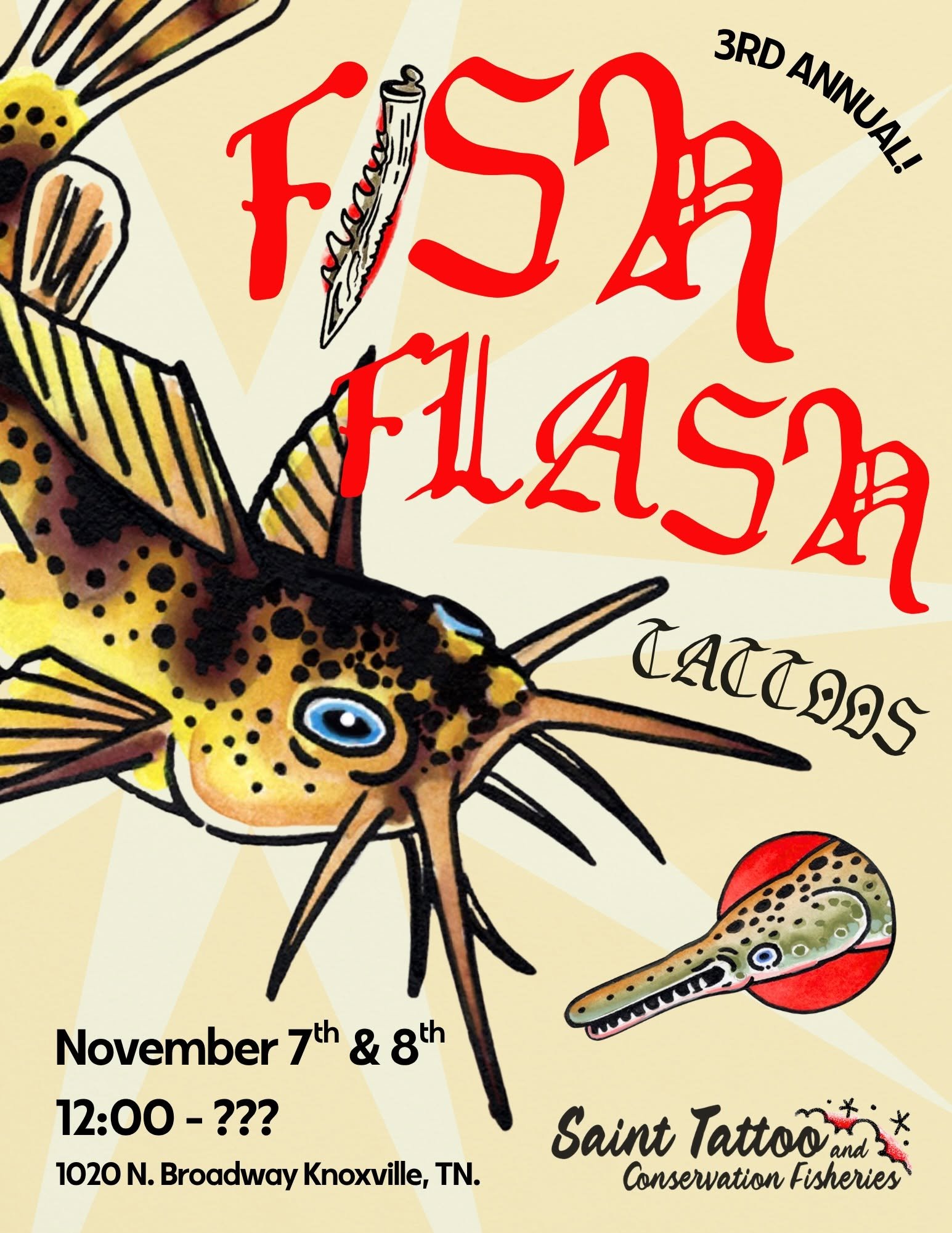
November 7th & 8th - Saint Tattoo Weekend
Mark your calendars for our yearly fish flash tattoo weekend! Designs will be posted the day before/the day of the event to follow tattoo flash traditions. Handpainted designs on arms and legs only. Flash designs begin at $100 each and cash is preferred. Doors open at 12pm and we don’t know when they close! This flash event is a fundraiser hosted by Saint Tattoo and a portion of proceeds benefit Conservation Fisheries and our restoration work.

February 20th, 2027 - Beneath the Surface Winter Dinner Fundraiser
Mark your calendars for our annual Winter Dinner, Beneath the Surface on February 20th, 2027, at the UTK Agriculture and Natural Resources Building (2431 Joe Johnson Dr).
This year, we're looking toward what's next. With over 40 years of conservation success behind us, we're building momentum, expanding our reach, and finding new ways to make an even greater impact for the rivers and communities we serve. We'll enjoy a delicious meal from Knoxville's own Tarik’s North African and hear from an exciting keynote speaker, who will be announced soon! Together, we’ll celebrate the progress we’ve made and look forward to the future of conservation!
We can't wait to gather with you for an evening of great food, community, and shared purpose as we continue pushing conservation forward, one bite at a time. Ticket and sponsorship information is coming soon - stay tuned for more!!
Species Spotlight
Buck Darter - Etheostoma nebra
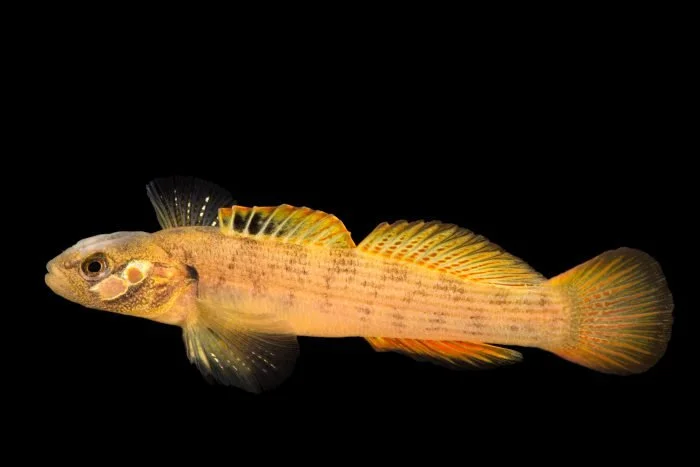
Buck Darter (Etheostoma nebra); photo by Joel Sartore
Buck Darters may seem unassuming, but the flashy bars on their cheeks and subtly beautiful orange coloring make them a darter that you don’t want to miss during spawning season! They are not currently federally listed on the Endangered Species List, and we hope that our work with them will keep it that way.
Buck Darters are small stream fish that spawn in the mid-late spring in small pools within spring-fed streams. They require large, flat, slab rocks as habitat, because that’s where they lay their eggs! At the start of spawning season, males will seek out the best slab rock and warn off any other males that try to take it for themselves. Females will turn their bodies upside down to lay the eggs on the flat rock above her, and the male will fertilize them. Males then guard the nests until the eggs hatch, often courting multiple females to the same rock to lay her eggs. This behavior makes it beneficial for CF biologists to collect these nest rocks from the wild and bring them back to our facility to rear, because these nest rocks are likely to be more genetically diverse than any that come from breeding groups that are propagated in our facility.
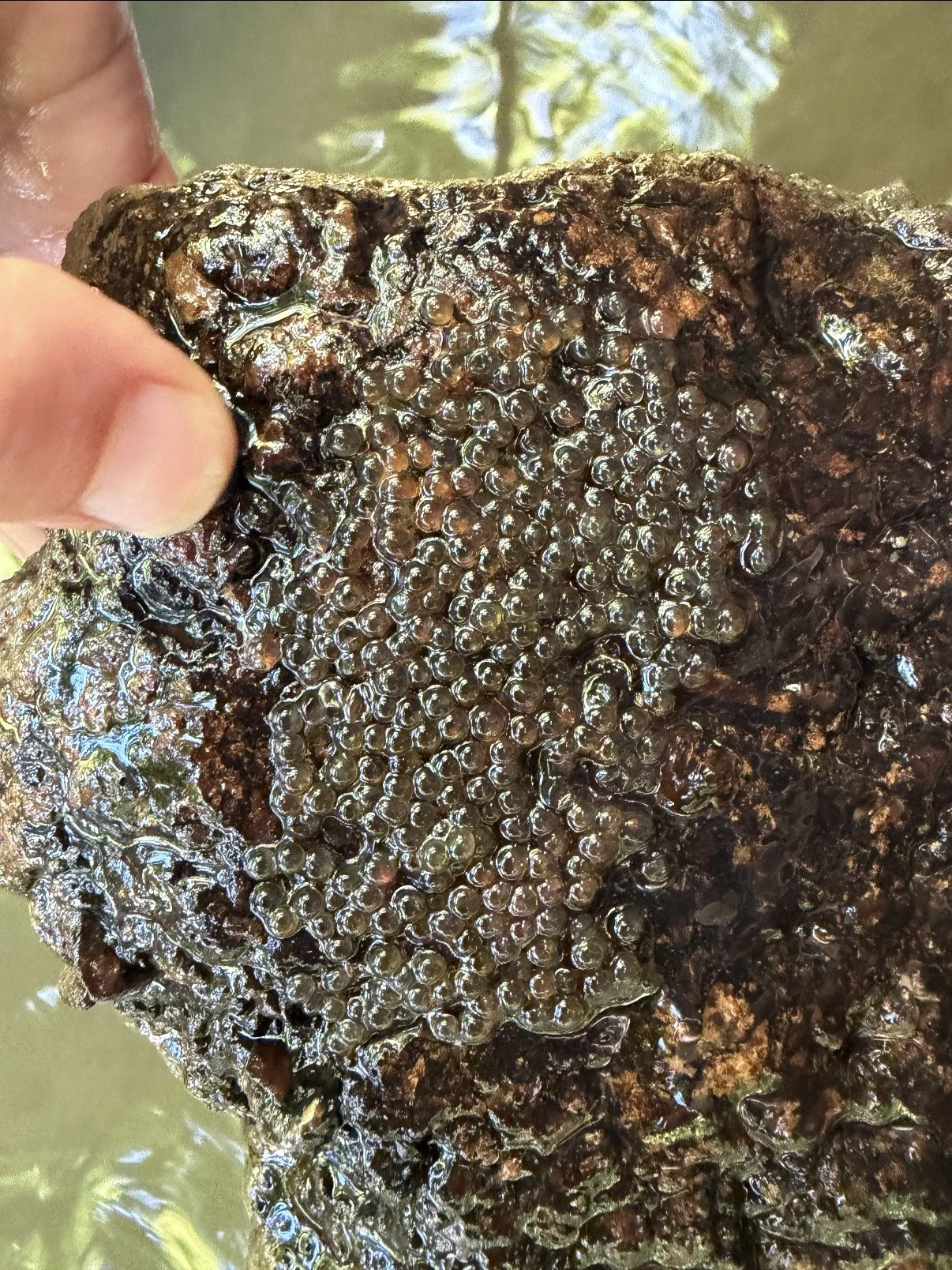
Buck Darter nest rock; photo by Conservation Fisheries
Like many of the species that Conservation Fisheries works with, Buck Darters very limited range. In this case, they are found to be in only one watershed in Kentucky. Its range is so limited because it used to be considered the same species as the Striped Darter. However, genetics showed that they were in fact separate species, decreasing the Buck Darter’s range to just one tributary. To safeguard this species, we’ve worked with the Kentucky Department of Wildlife Resources and the U.S. Fish and Wildlife service to identify additional tributaries within the watershed that it can thrive in and introduce captive raised young into those streams.
Over the last 10 years we’ve released and monitored Buck Darters into these tributaries. At this point we are so confident in those new established populations that we are able to discontinue active restoration because they are stable on their own. A true conservation success that we couldn’t be more proud of!
Community Outreach
Hellbender Festival
Our staff traveled to Spruce Pine, North Carolina to participate in this year’s Hellbender Festival, an event celebrating the Eastern Hellbender! We joined conservation organizations, local artists, and community members to highlight the unique biodiversity of the Southern Appalachian region. We provided educational activities and information about the Eastern Hellbender and other species we work with. This event gave us the opportunity to connect with the community and share how the conservation work we do at CF contributes to protecting and restoring our region’s aquatic biodiversity.
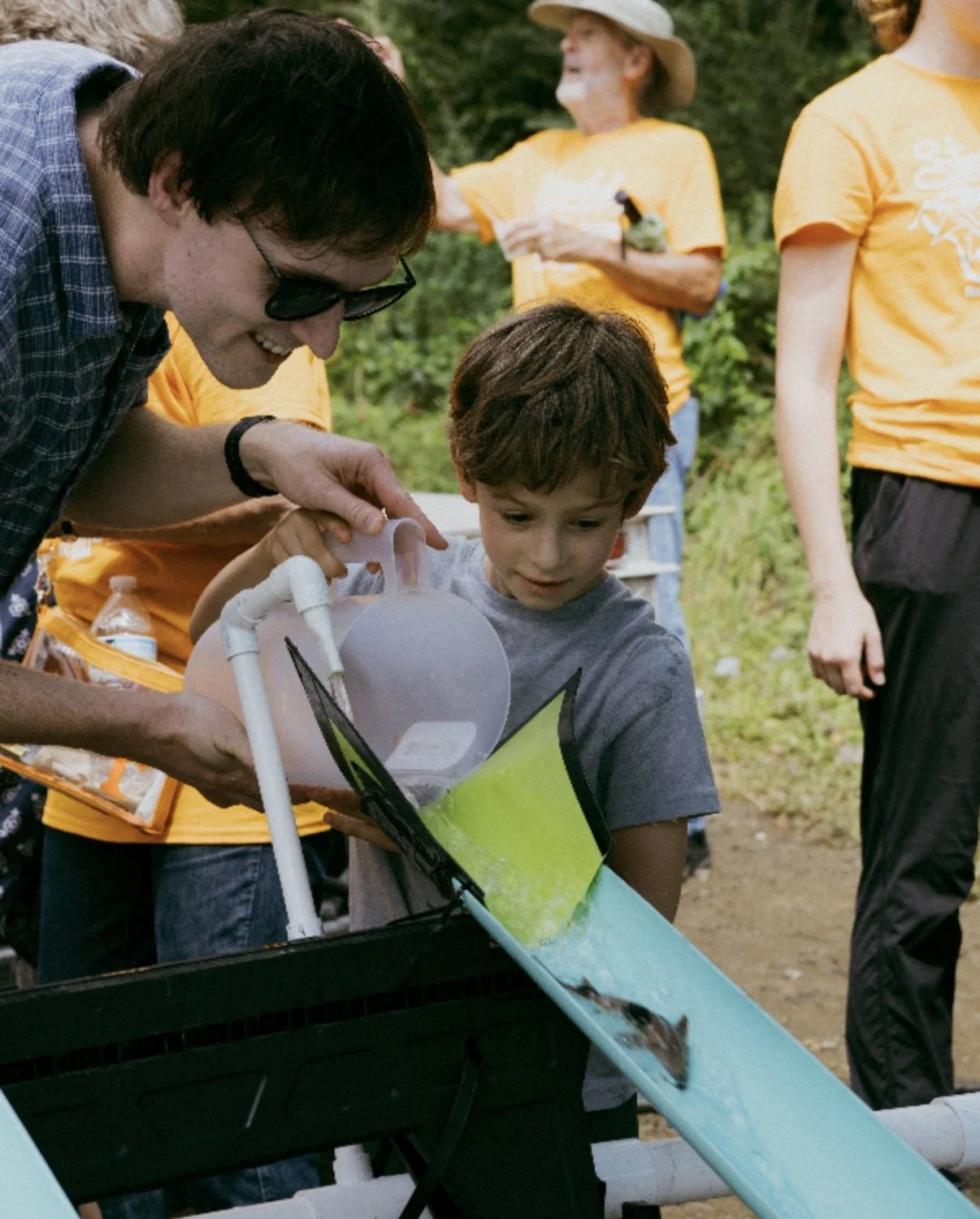
Sturgeon Fest
SturgeonFest
We joined several local conservation organizations at Sturgeonfest, an annual event held along the French Broad River at Seven Islands State Birding Park. This event gives visitors the opportunity to participate in conservation efforts firsthand by releasing juvenile Lake Sturgeon into the river as part of an ongoing effort to restore this native species to Tennessee’s rivers. Through conversations with visitors at our table, we were able to share the work we do at CF and demonstrate how conservation efforts help protect and restore native fish populations in the Southeast.
Hummingbird Fest
Ijams Nature Center hosted their annual Hummingbird Festival, an educational event that brings together local conservation organizations, researchers, and community members to celebrate hummingbirds and other species in East Tennessee. The festival gives visitors the opportunity to learn about hummingbirds and ongoing research efforts through educational activities, live demonstrations, and bird banding sessions. We provided information about Tennessee’s native fishes and the conservation work we do at CF, and it gave us the opportunity to highlight how aquatic and terrestrial ecosystems are connected and why protecting native species and their habitats is important to maintaining healthy ecosystems.
Season Highlights
Field Work
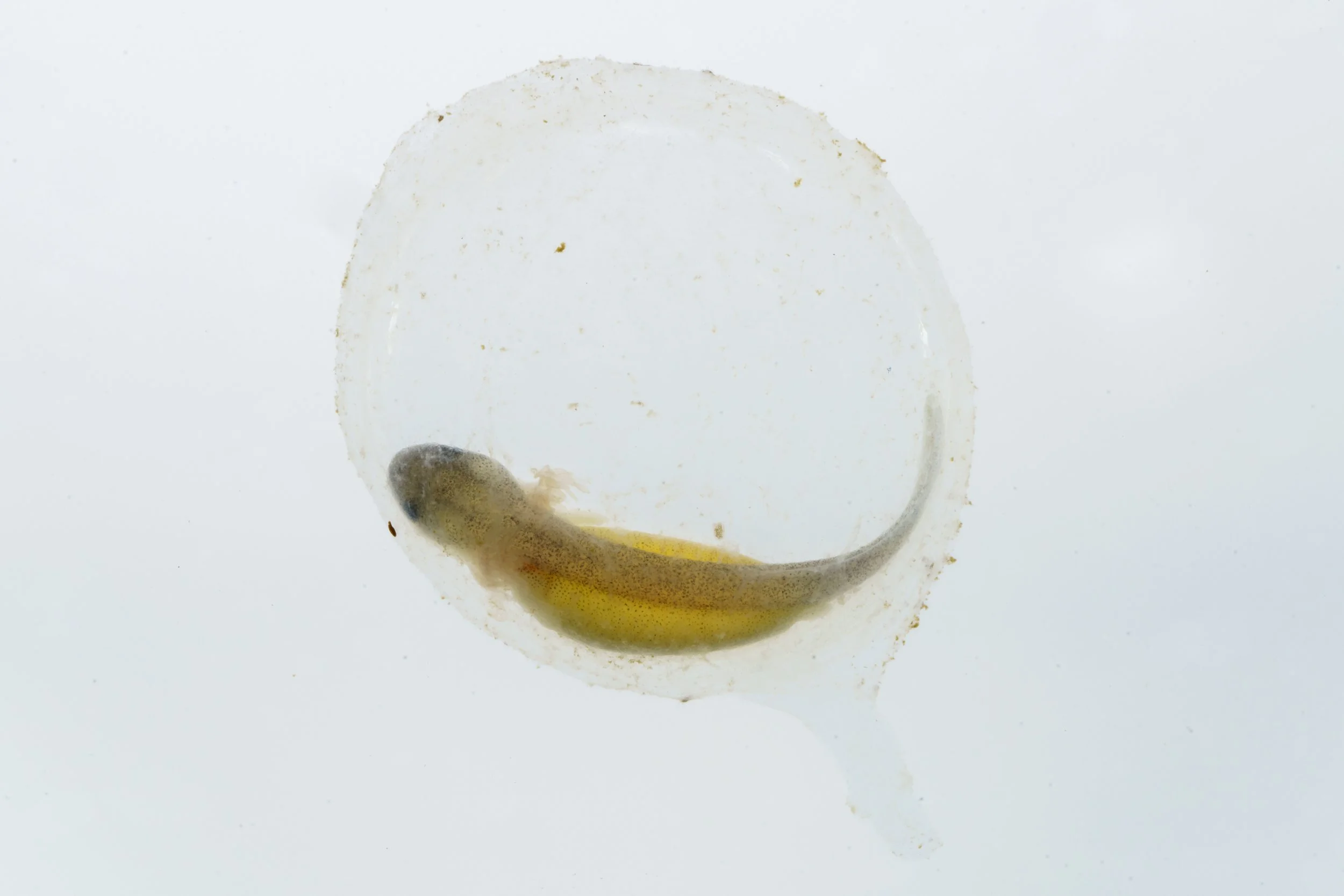
Ozark Hellbender egg
Ozark Hellbenders
In the fall of 2025 we brought in the first hellbender eggs that Conservation Fisheries has ever worked with. We had an extremely successful rearing season, earning ourselves a seat amongst the other incredible facilities that work with these large salamanders. Late this summer we got word from our partners in Arkansas that their field team observed Ozark Hellbender eggs for the first time in the wild in many, many years. This prompted a very quick project proposal for Conservation Fisheries to rear these Ozark Hellbender eggs, much like we are doing with the Eastern Hellbender. We’re stoked and honored to be a part of this network of biologists, and to work more with these incredible animals!
First Release of Cumberland Arrow Darters
This year was our very first year propagating the Cumberland Arrow Darter. They have recently been split from the Kentucky Arrow Darter, which Conservation Fisheries worked with over a decade ago. Despite being so similar, we observed some significant differences in their breeding behaviors. Despite these differences, we were able to do a release of Cumberland Arrow Darters into a formerly inhabited stream where they now reside for the first time in over 20 years! Huge thanks to our partners at Cumberland Gap National Historic Park, who get a special shoutout at the end of this newsletter.
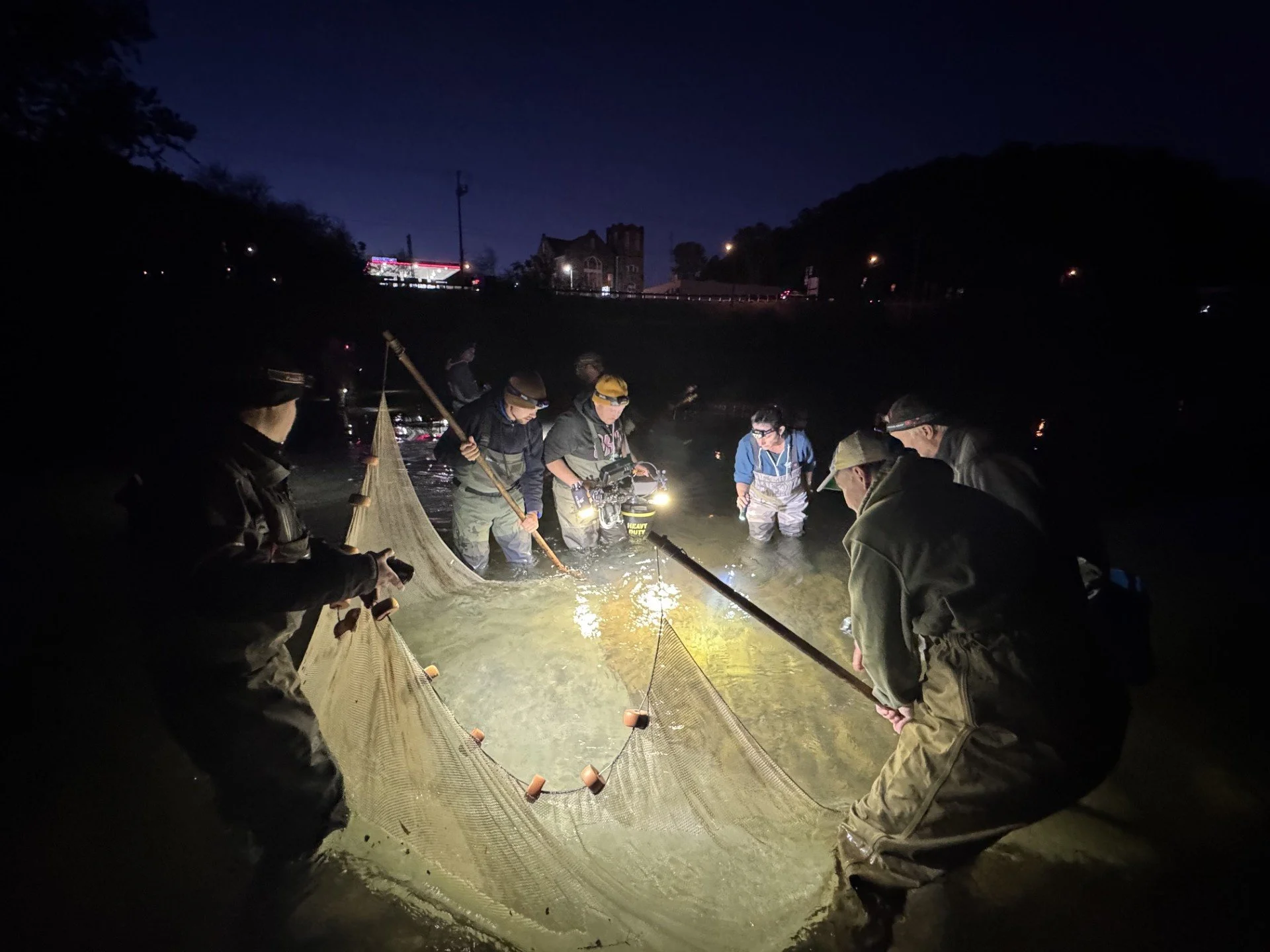
Diamond Darter broodstock collection
A Bunch of Broodstock
With 40+ years of conservation work comes an incredible amount of generational knowledge. Even so, every year we seem to make new discoveries, observations, and updates to techniques and protocols to ensure that we’re doing the best we can for these incredible fishes. One of these updates is how early we bring broodstock into our facility. If a fish is collected too close to its spawning season, there is an increased risk of stress on the fish, which can inhibit reproduction. Due to this, for most of our species, we collect broodstock in the late summer through early winter. This allows us the chance to “over winter” them in our facility, allowing them a much longer time to acclimate to being in tanks before we reach the month and temperature where they prefer to spawn. Not only do we see better reproduction, but the fish are happier, too!
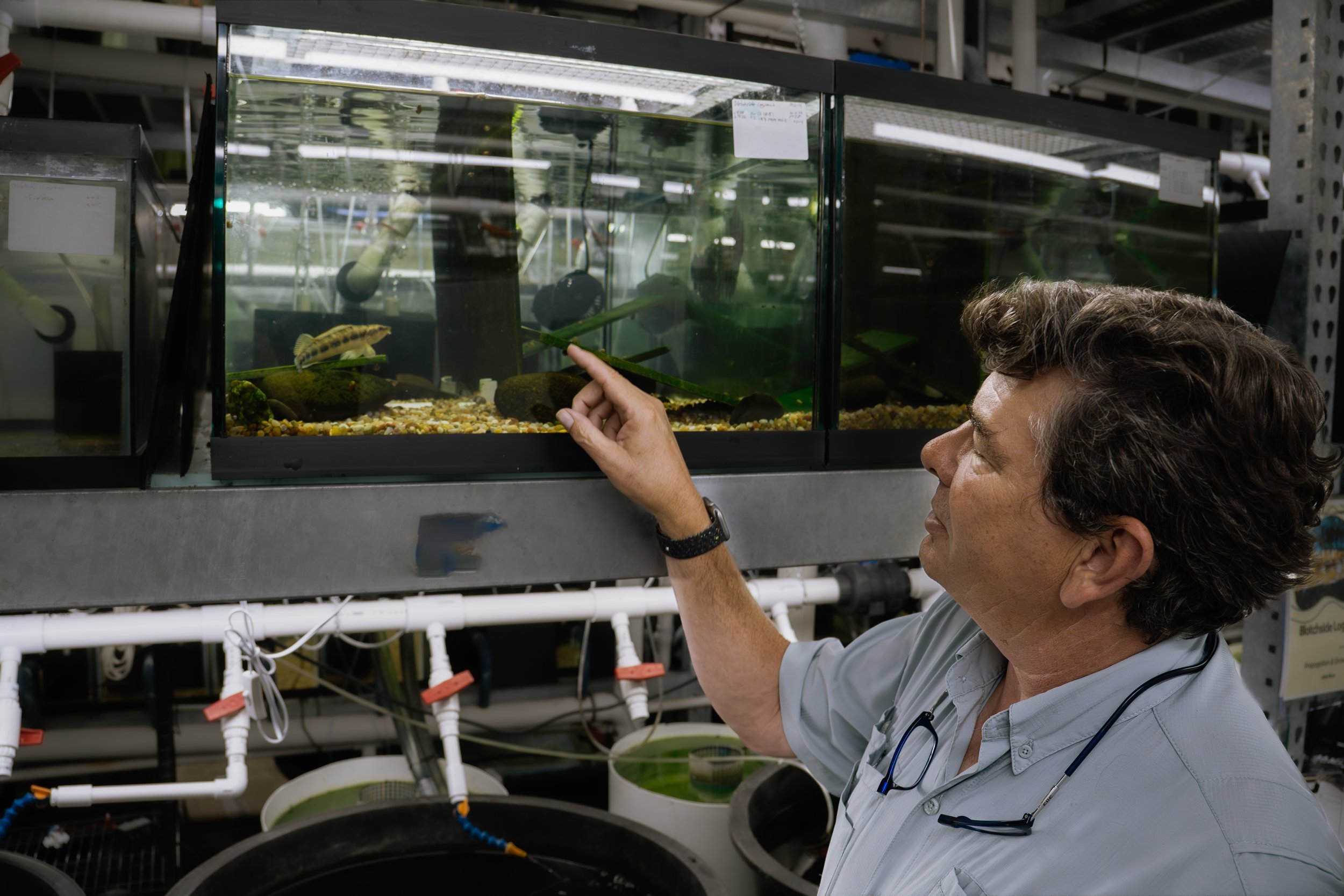
Bo and Blotchside Logperch'; photo by Aster Treat
Bo Baxter as a Garden and Gun Conservation Hero
We are so proud of our very own Bo Baxter, Executive Director of Conservation Fisheries, for being recognized as one of Garden and Gun’s 2026 Conservation Heroes. Each year a group of “esteemed eco-advocates” sorts through any and all entries of the coolest folks doing extremely important and impressive conservation work. If you ask Bo, sometimes he tells you that he just signs our checks. In reality, he’s a driving force behind every single conservation project that comes through our organization, is constantly working to make sure that our biologists have the resources we need to care for the fish, and is always one to offer a helping hand when we need it. We may be biased, but this honor is well deserved.
Partner Feature
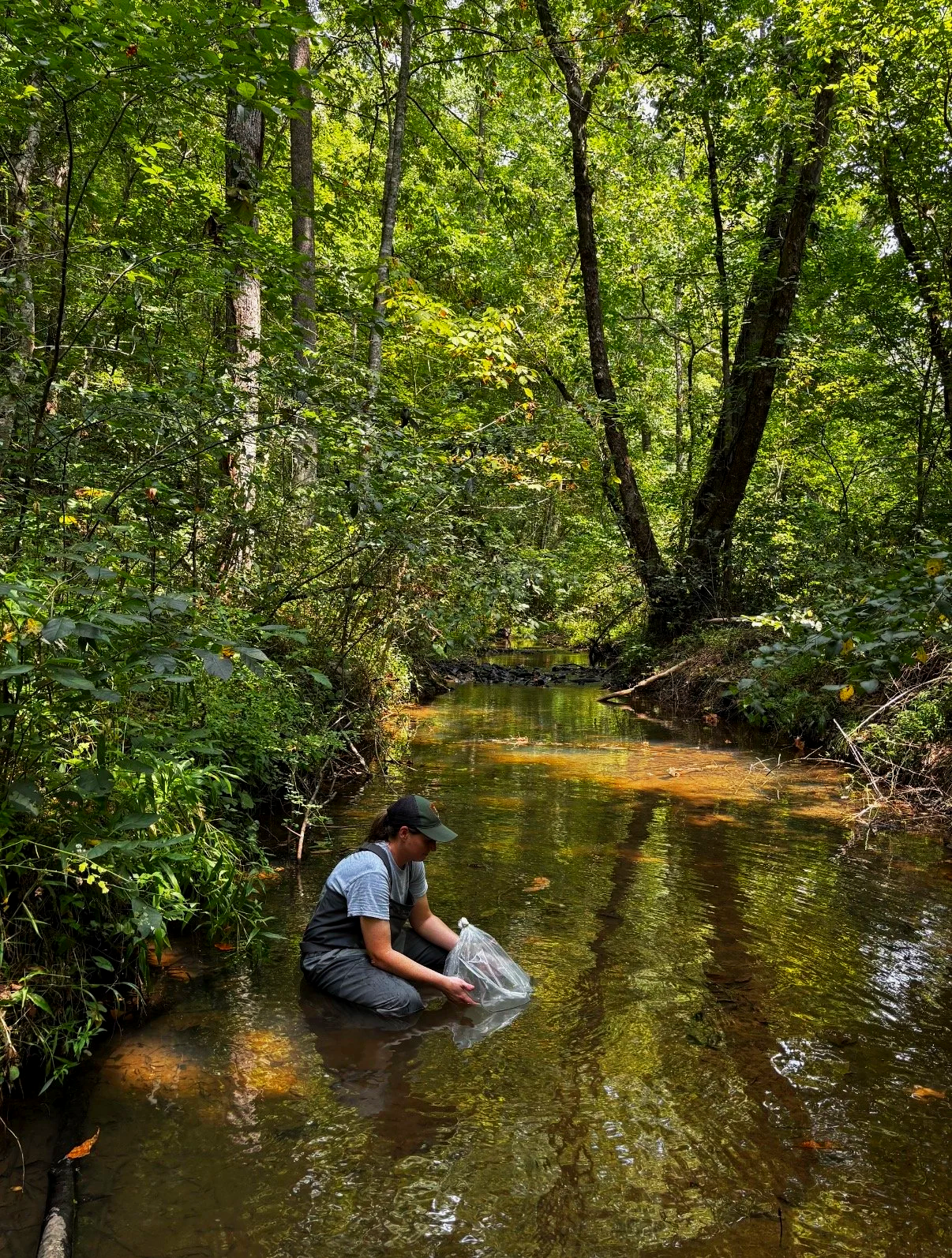
Amy Settles (CUGA) releases Cumberland Arrow Darters; photo by Missy Petty
Cumberland Gap National Historic Park (CUGA), a part of the National Park Service, is situated where Tennessee meets Kentucky and Virginia. Carved by wind and water, their Nature and Science page explains that Cumberland Gap forms a major break in the Appalachian Mountain chain. The natural beauty of Appalachian Mountain country, lush with vegetation, supports diverse animal life, including white-tailed deer, black bear, rabbit, raccoon, opossum, gray squirrel, fox, and wild turkey. Natural resource inventories of amphibians, birds, fish, mammals, reptiles, and plants completed in the early 2000s documented over 1,200 types of organisms in the park, and more than 130 of these are considered rare.
Two of these rare species are the Cumberland Arrow Darter and the Blackside Dace. Conservation Fisheries began working with CUGA in 2024 to begin restoration of these two species within the park boundaries. This agreement was the first that we’ve ever been granted through the National Park Service, though some of our other work does fall within other NPS boundaries.
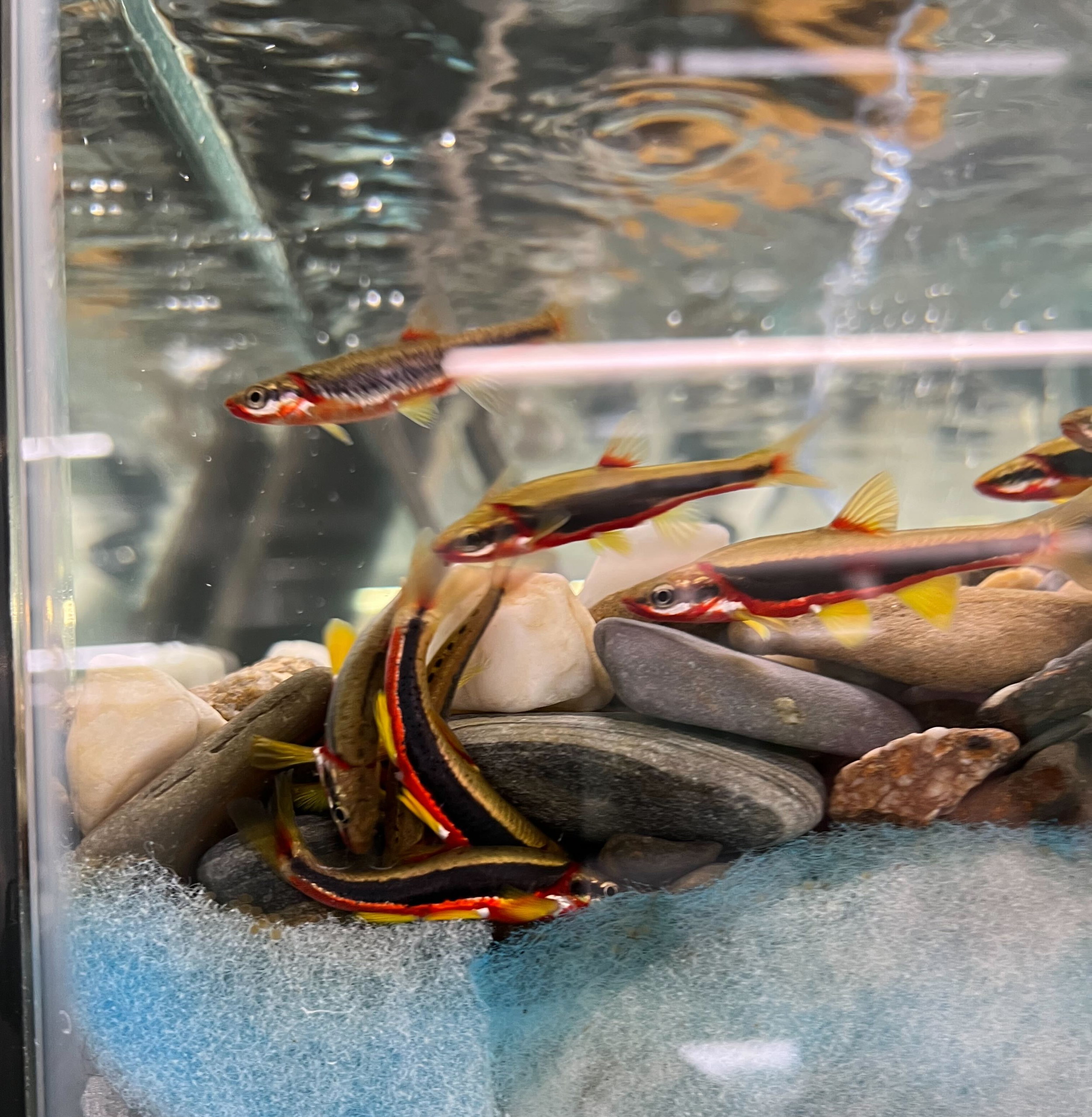
Blackside Dace spawning; photo by Crystal Ruble
As with several of the projects that Conservation Fisheries works on, species restoration for both Blackside Dace and Cumberland Arrow Darters is intended for streams that are considered a former part of their range. In the early 1990s, in portions of the park where these species used to live, beavers moved in and transformed much of the stream into dammed beaver ponds, greatly altering the habitat into something that does not support these two stream fish species. In addition to propagation and restoration of these species by Conservation Fisheries, CUGA and the USFWS will be completing management projects focused on reducing the impact of beavers and non-native fish species in these streams.
Conservation Fisheries has been having a blast with this project and working with the Cumberland Gap National Historic Park! While this may be our first project with them, we certainly hope there will be more to come.
Gratitude
Contributions
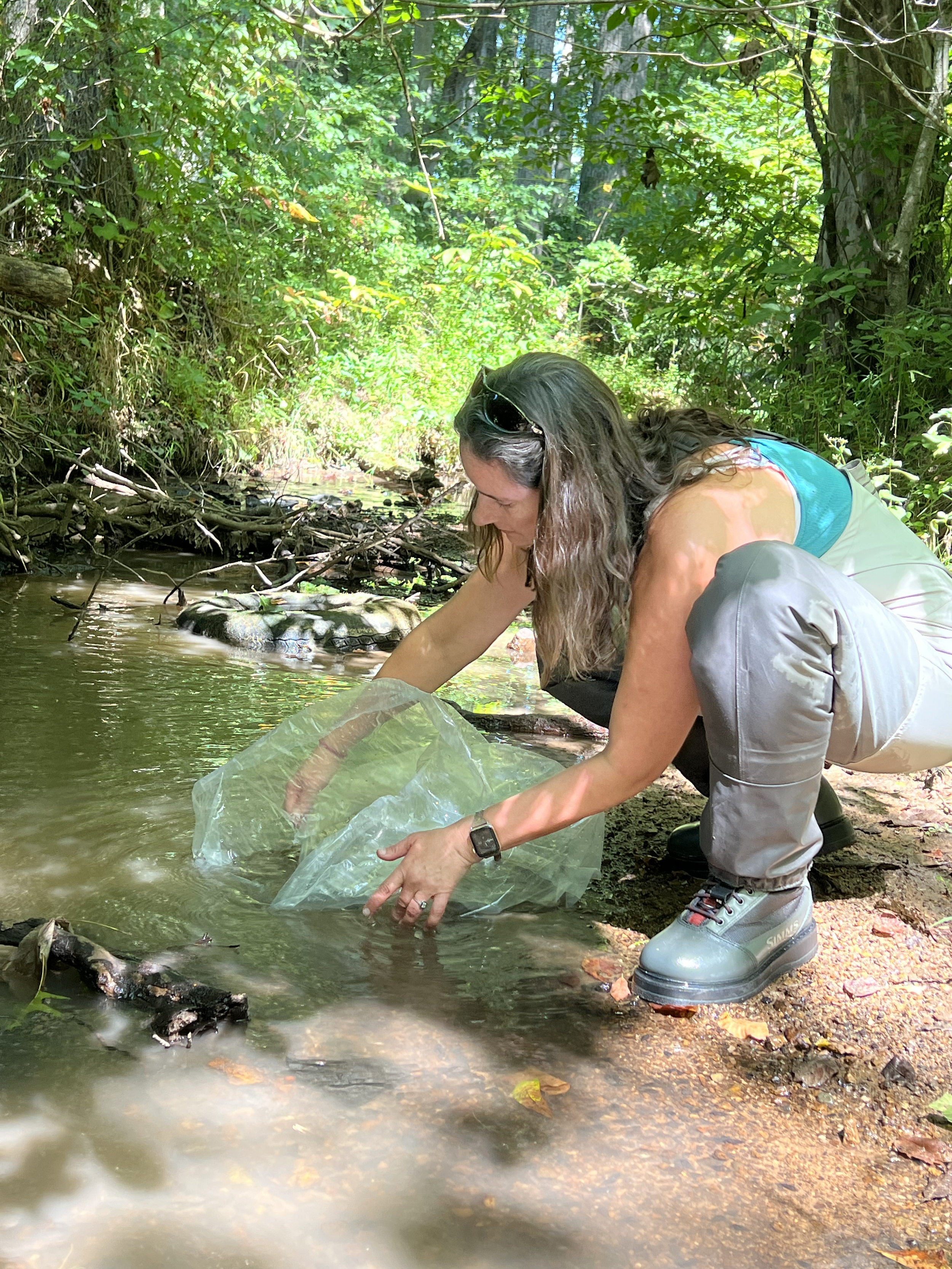
Crystal releasing Buck Darters; photo by Conservation Fisheries
Many thanks to all of the Conservation Fisheries staff members that contribute ideas for the newsletter as well as photographs of our field and facility work, especially of the beautiful fish that we have the pleasure of working with every day. Thank you as always to Joel Sartore, who has taken brilliant photographs of our species for years which appear constantly throughout our website and newsletters. Information and photos about outreach and events are thanks to Grace, Aster, and Marley. Thanks to Bo, who has countless things to do as our Executive Director but will always give feedback on the newsletter draft.
Gratitude
We are always extremely grateful to the folks who love the fish as much as we do. If our work speaks to you, please consider a donation to our organization. In times like these conservation work is more important than ever, and even small donations from our supporters make a big impact. Other support, such as liking our social media posts or stopping by our outreach booths at community events, means the world to us, too. Thank you all for everything.
— The Conservation Fisheries Team