

Conservation Roundup: May 2026
Conservation Round-Up
Spawning Season is Officially Upon Us!
Late spring into early summer is easily the busiest season at Conservation Fisheries. At this point the fish in our care that spawn in cooler temperatures, such as the Leopard Darters, Roanoke Logperch, and Cumberland Arrow Darters, have all finished spawning (you may have seen a certain viral video online of the Cumberland Arrow Darters spawning that has over 9 million views) and the young-of-year fish are happily growing in their tanks. Most of the rest of the species are now in full swing! Regarding darters, the largest group of fish we work with, Blotchside Logperch, Candy Darters, and Pearl Darters are all breeding in the facility. Buck Darter, Duskytail Darter, and Marbled Darter nests have all been collected from the wild (for the benefit of nest size and greater genetic diversity), and all of those nests have hatched and babies are growing. As for our minnows, Tennessee Dace have been laying eggs like there’s no tomorrow, and Spotfin Chubs are getting a bit of an early start! The Eastern Hellbenders that were brought in as eggs last fall and have been rearing in the facility are growing like crazy and we couldn’t be more excited about them.
Volunteer Program
We’ve recently begun our summer volunteering season and are thrilled to have brought on three new volunteers into our facility! We’d like to thank everyone who applied to volunteer with us this summer for their interest in working with us and learning more about conservation aquaculture and restoration biology. There are always many applications, and every season we wish we could bring on more volunteers. The capacity for each season is based on how many returning volunteers we have, what the workload of the season is, and the capacity of our staff to train and work with these new volunteers.
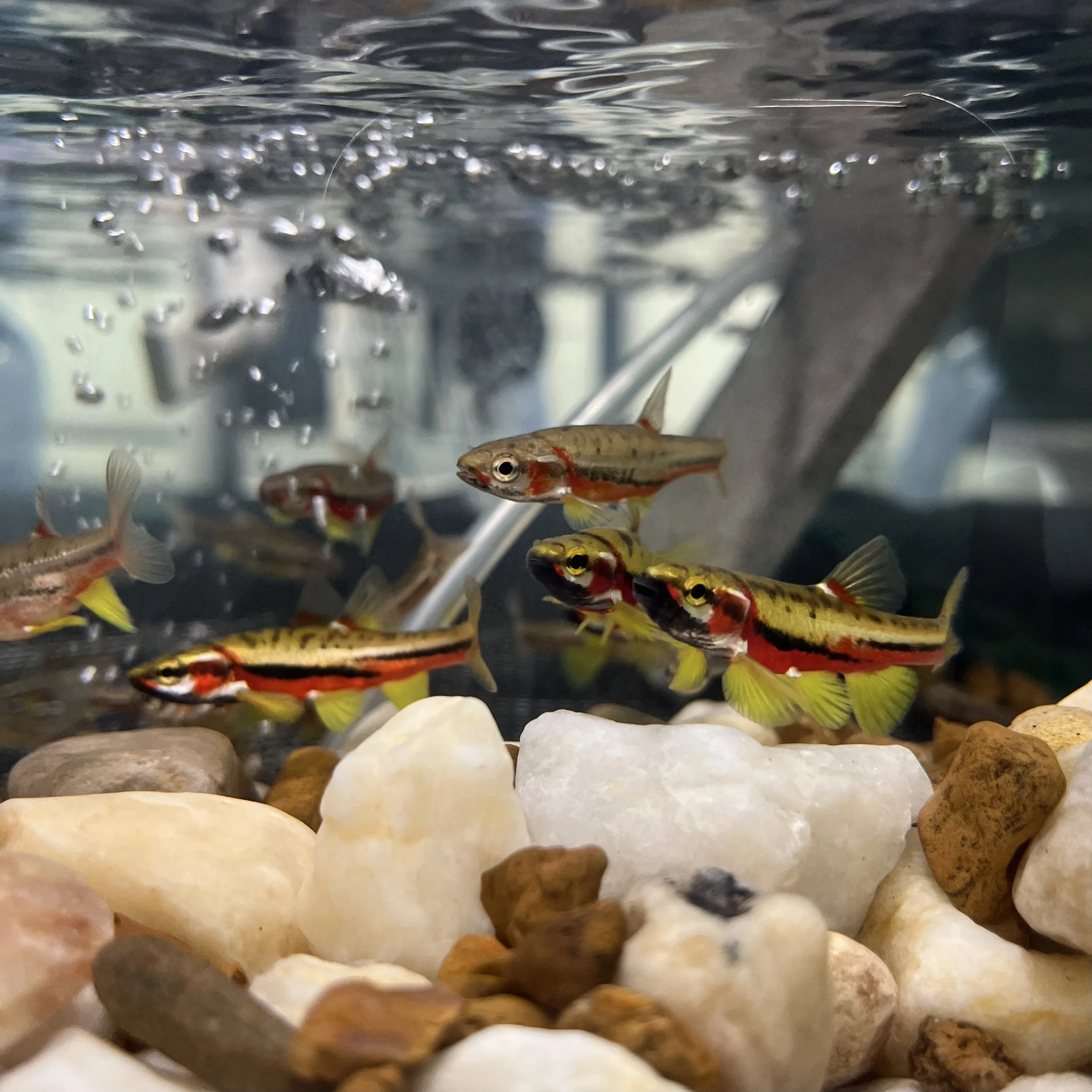
Tenneeesse Dace, Chrosomus tennesseensis - Photo by Conservation Fisheries
With that in mind our next Volunteer Season will be in the fall from September 2026 - November 2026. Applications for this season will open the first week of August and can be found on the Volunteer Program page of our website as well as through our social media pages.
We’re also thrilled to be continuing to offer internship focused volunteer opportunities as an extension of our Volunteer Program in partnership with the University of Tennessee, Knoxville and Tennessee Technological University in Cookeville. As we build our Internship Program, students are able to obtain class credit while working at our facilities. All intern-focused opportunities for the remainder of the year for both facilities have been filled, and we’d like to encourage students interested in future opportunities to please keep an eye out and chat with your major professors. At this time all internship-focused opportunities are filtered directly through professors at UTK and TnTech.
Save the Date
Image by Keep Tennessee River Beautiful
Keep Tennessee River Beautiful is hosting their 2nd annual MusselFest celebrating the rich biodiversity of freshwater mussels in the Tennessee River. Join Conservation Fisheries as we celebrate along with various other conservation partners the many species of freshwater mussels that are native to Tennessee and help to keep our rivers and streams clean.
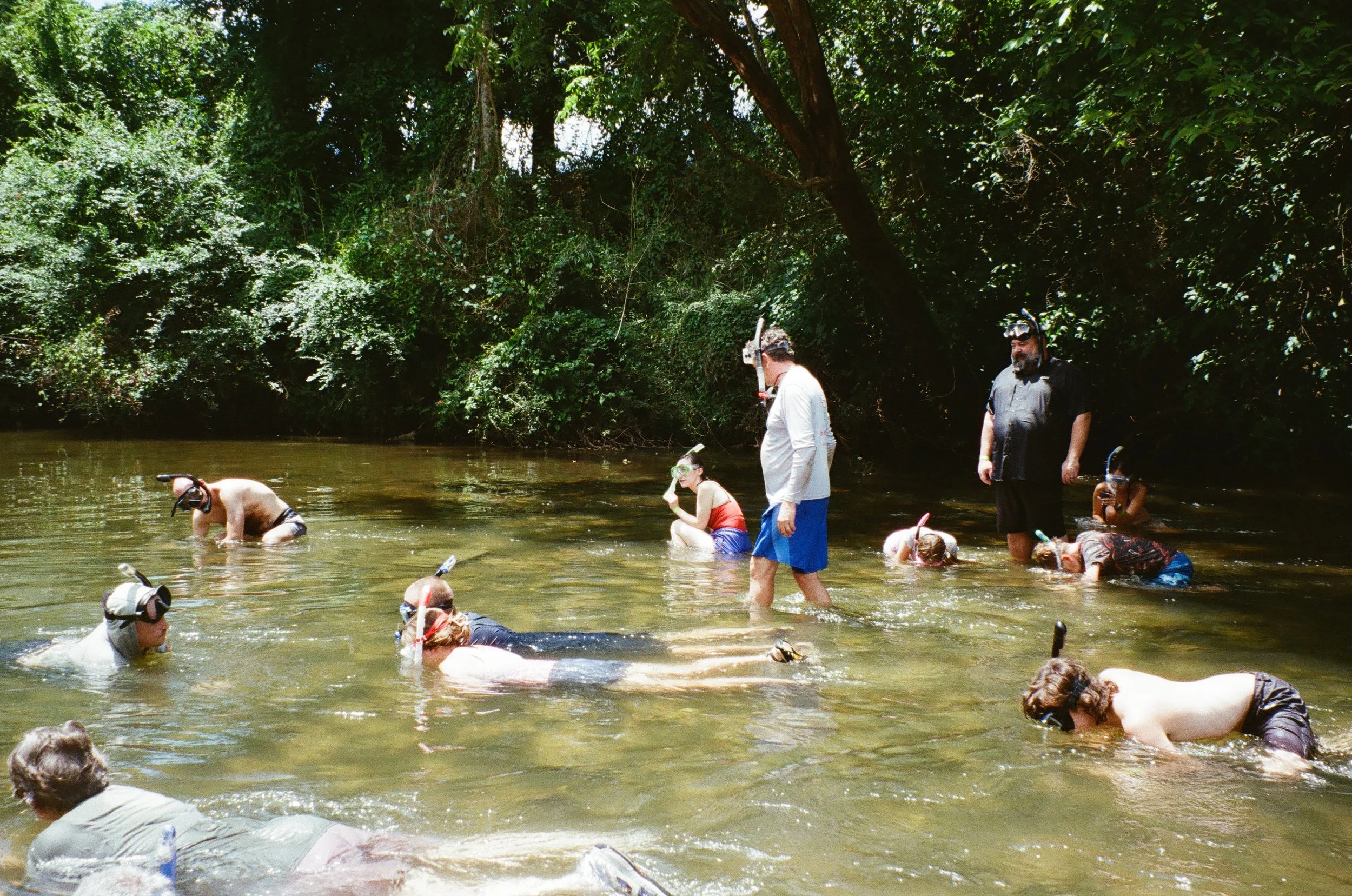
Little River Community Day, 2025 - Photo by Aster Treat
July 25th - Little River Community Day
Join Conservation Fisheries and Little River Watershed Association for Little River Community Day! This annual event is free and open to all river lovers. Please BYOB (beer), BYOC (chairs), BYOS (snacks), BYOW (water), BYOSS (sunscreen), BYOTNFAFDO (things necessary for a fun day outside). More details about food and activities to come!
Image by Ijams Nature Center
August 15th - Hummingbird Festival
Every year, the Ijams Hummingbird Festival brings bird lovers, families, and nature enthusiasts together for an unforgettable hands-on experience focused on hummingbird conservation and research. During the festival, guests can join small-group sessions with expert bird banders from East Tennessee Avian Research and Seven Islands State Birding Park as they operate a hummingbird research banding station on-site. Conservation Fisheries is excited to participate in this event as a conservation partner - come visit us as our booth!
Image by Downtown Spruce Pine
September 5th - Hellbender Festival
The North Carolina Hellbender Festival is a free, one-day event held each Labor Day weekend in Downtown Spruce Pine, celebrating clean rivers, outdoor recreation, and life in the Blue Ridge Mountains. Named for the Eastern Hellbender salamander, the festival brings together live music, local food, artisan vendors, and hands-on experiences focused on conservation and river health. Visitors can explore interactive exhibits, educational workshops, and art activities that highlight the importance of protecting our waterways. Join Conservation Fisheries in celebrating our favorite salamander, the Eastern Hellbender!
Species Spotlight
Pearl Darter - Percina aurora
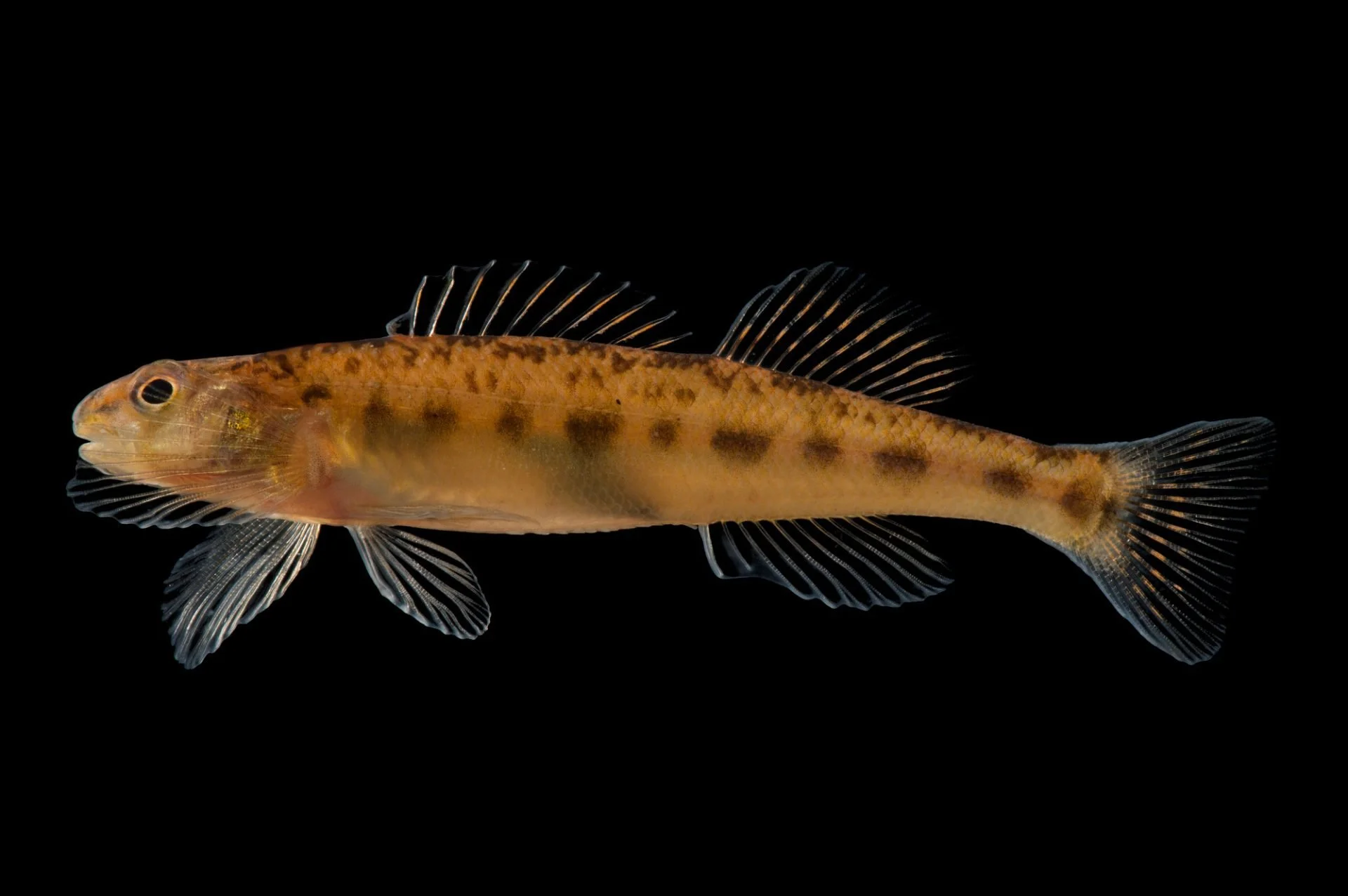
Pearl Darter, Percina aurora - Photo by Joel Sartore
Pearl Darters are a small, inconspicuous darter native to Mississippi and Louisiana river drainages, making them Conservation Fisheries’ first project in Mississippi! They are broadcast spawners who bury their eggs within the substrate during their mating ritual. Like many other darters, Pearls prefer their spawning habitats to be in shallow areas of rivers with high flow, and are typically spawning during the late-spring.
Collecting Pearl Darters to bring back to our facility for breeding has proven a bit difficult. Not only are Pearl Darters famously difficult to find, it is also extremely difficult to tell males from females, even during the spawning season! Unlike many freshwater fish where the males get colorful as temperature increases and they near their spawning window, these males stay relatively unassuming and therefore look nearly identical to the females. Therefore, we collect as many individuals as we believe we need for an appropriate breeding group and cross our fingers. As spawning season nears, the females begin developing eggs and become visually gravid, and only then can we begin to tell the difference between males and females and start putting together breeding groups.
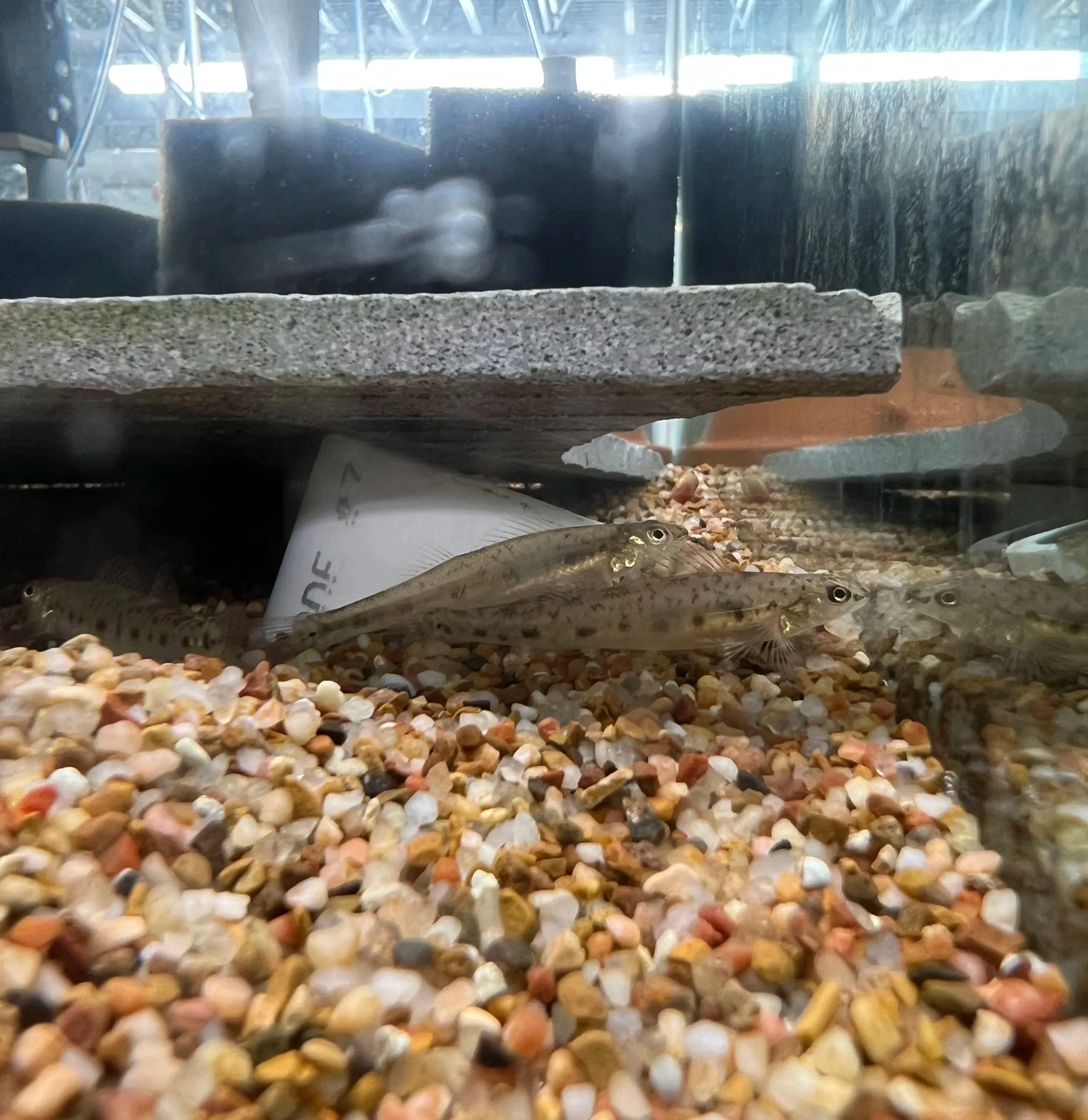
Pearl Darters in the CF facility - Photo by Crystal Ruble
Pearl Darters are native to the Pearl and Pascagoula River drainages in Mississippi and Louisiana, but surveys have not recorded seeing them within the Pearl River since the 1970s. This disappearance is likely due to human-driven changes to habitat including the construction of the Pearl River Navigation Canal and impoundment of the river creating the Ross Barnett Reservoir in the 1950s-1960s.
Our current restoration project for the Pearl Darters is in partnership with the U.S. Fish and Wildlife Service and the Private John Allen National Fish Hatchery (PJANFH). While Conservation Fisheries is working on developing and solidifying propagation protocols, production and rearing will eventually be transferred more locally to PJANFH. This restoration project aims to re-establish a population of Pearl Darters within the Pearl River in an area where the existing habitat can support the species within this area of its historic range.
Community Outreach
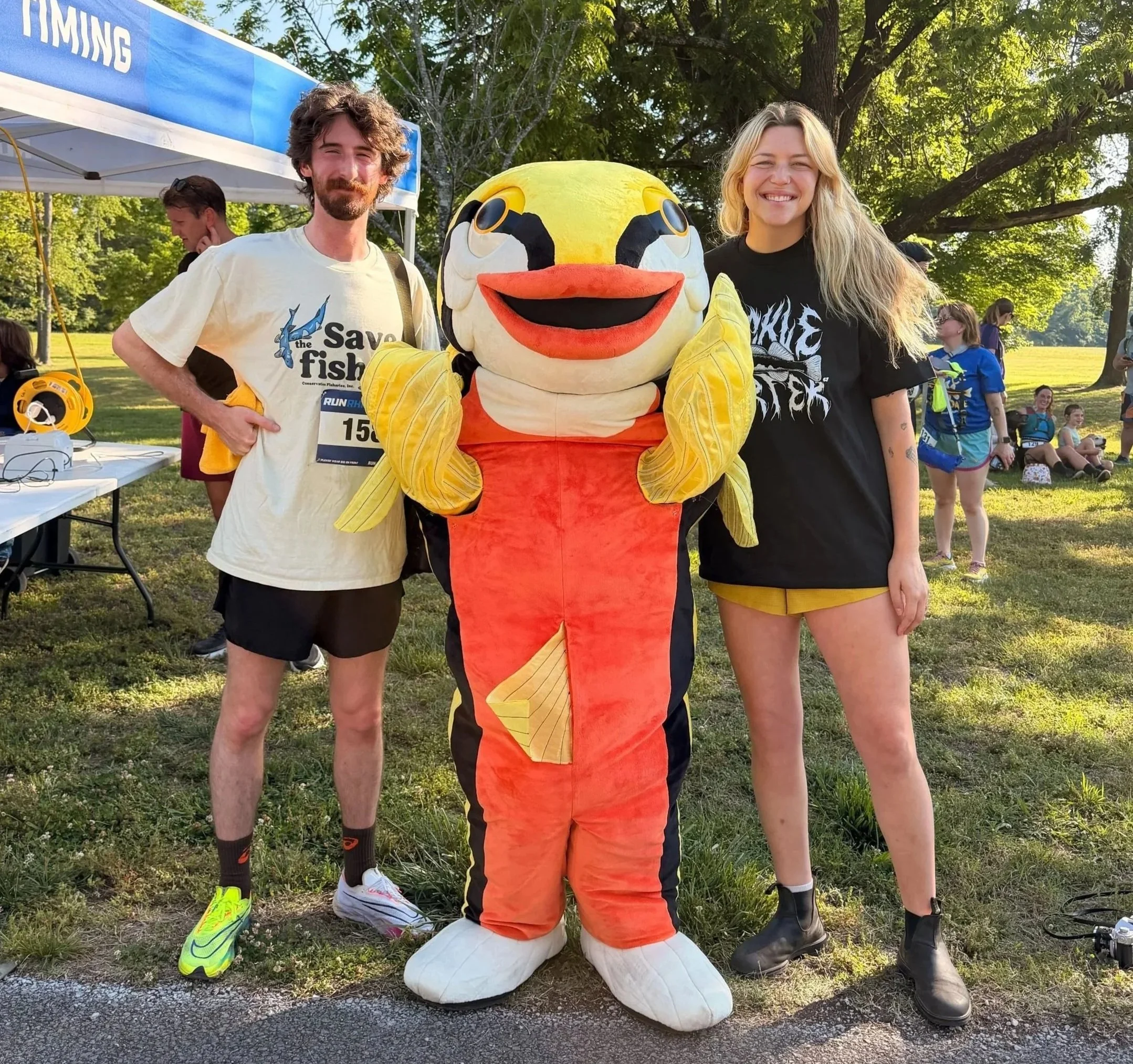
Grace and Patrick at Laurel Dace Day
Laurel Dace Day
We had a great time celebrating Laurel Dace Day with our partners at the Tennessee Aquarium and the townsfolk of Spring City, TN! When the town of Spring City learned about an Endangered Species endemic to their area, they sprung into action to adopt the Laurel Dace as their city’s mascot and work with conservation partners to raise awareness about this species. The second annual Laurel Dace Day included a community race, local farmer’s market and artisan vendors, music, and activities such as a snorkel in the Piney River lead by Conservation Fisheries biologists!
Cattywampus Parade and Block Party
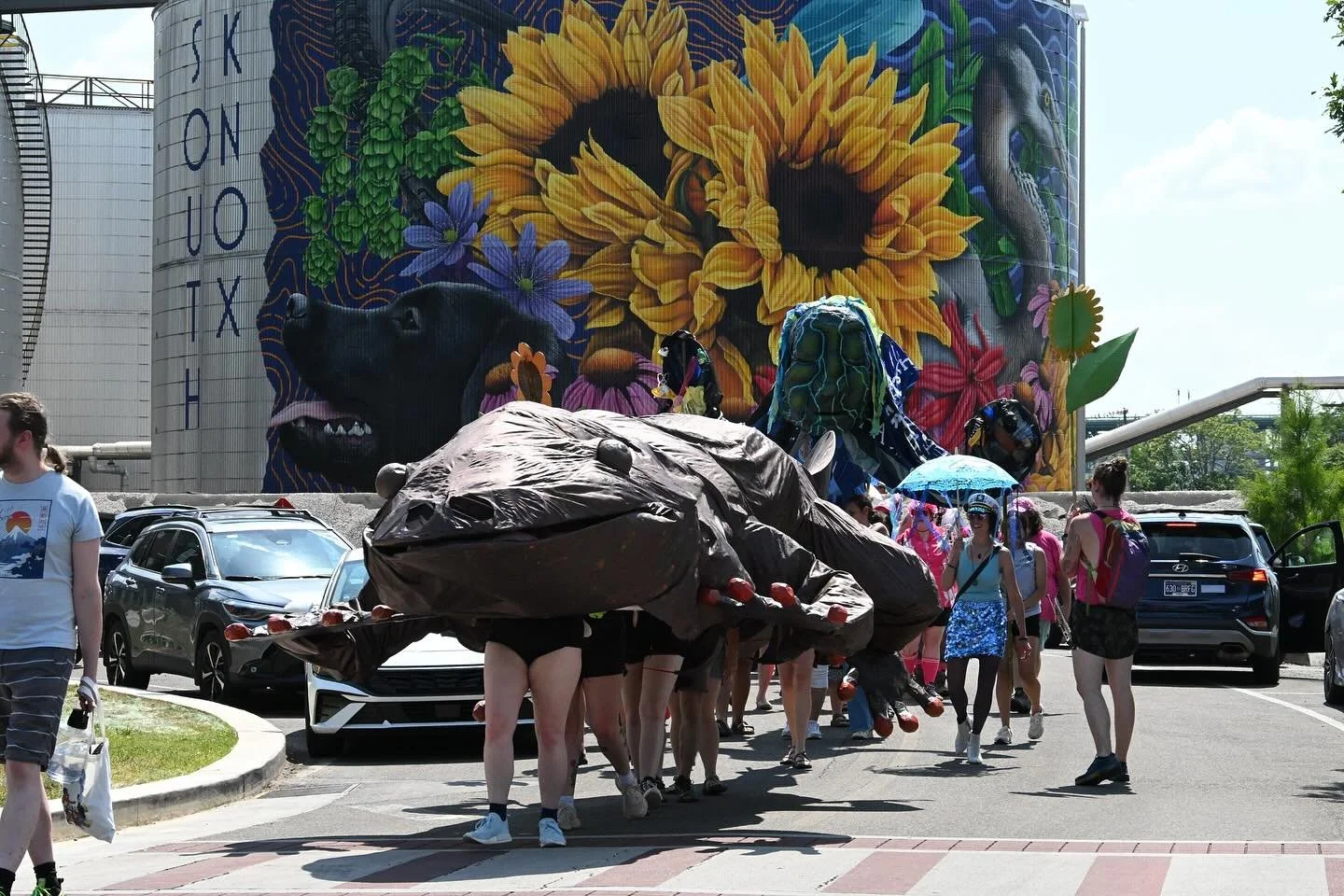
Hellbender puppet - Photo by Cattywampus
The artistic and vibrant folks on the Cattywampus Council invited Conservation Fisheries to be a part of their 9th annual celebration this year! After deciding that they wanted to honor the Eastern Hellbender with a puppet during this year’s parade, Cattywampus visited Conservation Fisheries to check out our larval hellbenders for inspiration for their puppet! To tie everything together, our team not only displayed fish at the block party but also brought crafting materials for attendees to create good luck cards for our resident Eastern Hellbenders.
Outlandish Festival
Hosted by Ijams Nature Center, Outlandish Festival transformed the park into a dynamic playground for thrill seekers, nature lovers, and East Tennessee families. Conservation Fisheries joined with other local organizations to celebrate Knoxville’s rocks, trails, rivers, and unmatched outdoor spirit with a wide variety of activities, entertainment, and community connections. We can’t wait to do it all again next year!
Season Highlights
Blotchside Logperch Bonanza
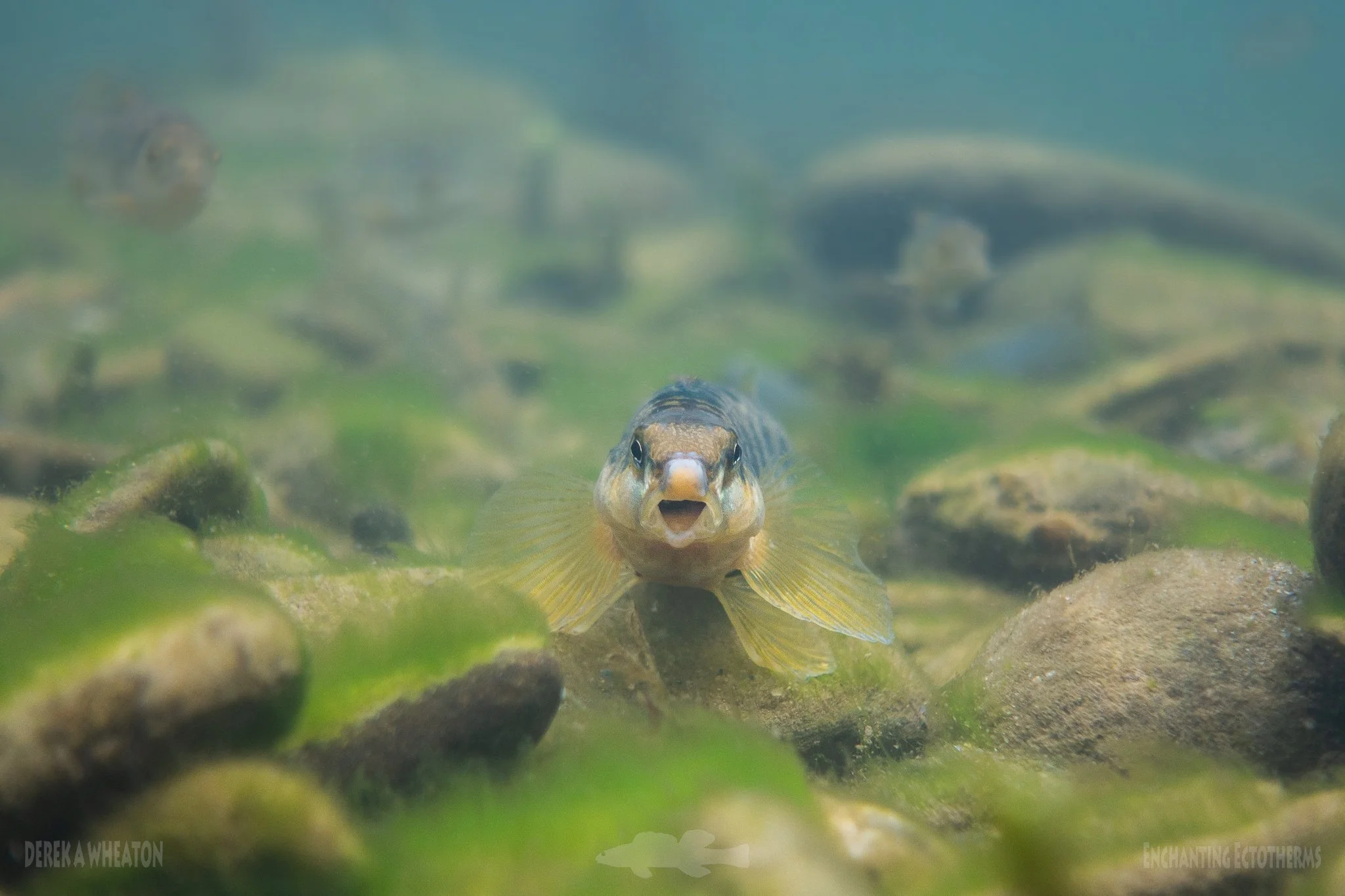
Blotchside Logperch - Photo by Derek Wheaton
For any given species that we work with in our facility, Conservation Fisheries biologists can generally give an estimated amount of production based on a few factors: how many spawning groups there are; how many females in each group; the fish’s age; general known fecundity (capability to reproduce) of the species. This is never an exact number, and results can vary year-to-year based on a variety of factors.
Blotchside Logperch are a large darter and can be relatively active and jumpy, in comparison to other darters that are smaller and tend to hunker down under habitat as a normal behavioral trait. We have taken a few new precautions regarding the Blotchside Logperch in our care to reduce their “jumpiness,’ and in turn the stress it may cause them. A lower stress level in fish is a factor that will, generally, increase their reproductive output and therefore allow our biologists to raise a larger number of their young to eventually assist in restoring their wild populations.
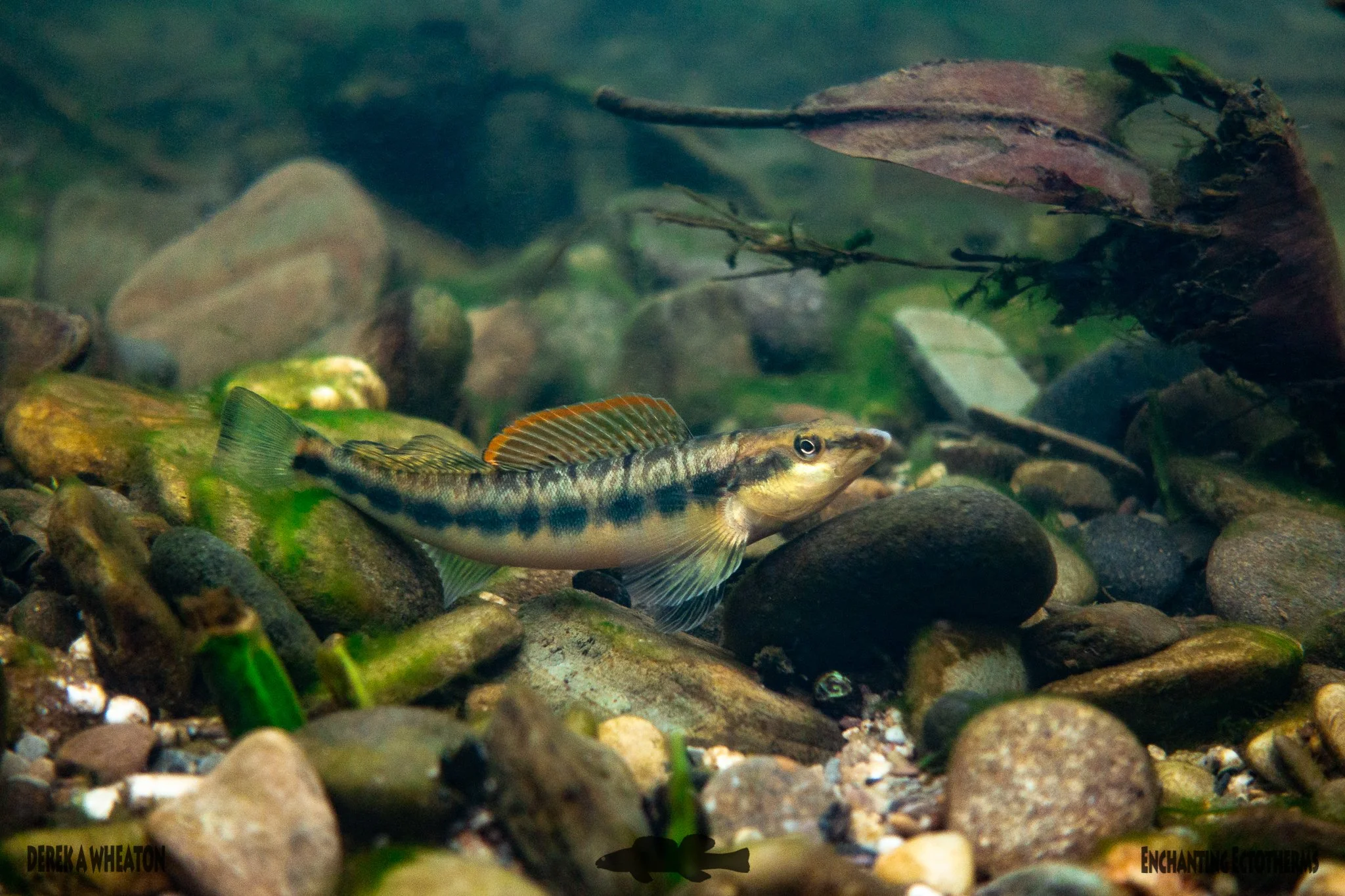
Blotchside Logperch - Photo by Derek Wheaton
This year, we believe largely due to the changes made to keep the Blotchside Logperch as comfortable and calm as possible, we have seen more than double the number of eggs and larvae from this species compared to last year. Additionally, with healthier adults come healthier eggs and larvae. The survivorship of Blotchside Logperch young this year is more than triple the survivorship of last year’s young.
Conservation work, even with 4 decades of generational knowledge and protocols in place, is always a work in progress. Our biologists are constantly making small changes to our techniques and methods to ensure that the fish held in our facility are getting the best care, and that their progeny are surviving, healthy, and ready to take on the wild waters of their historical habitat in southeastern rivers and streams.
Joel Sartore Visit
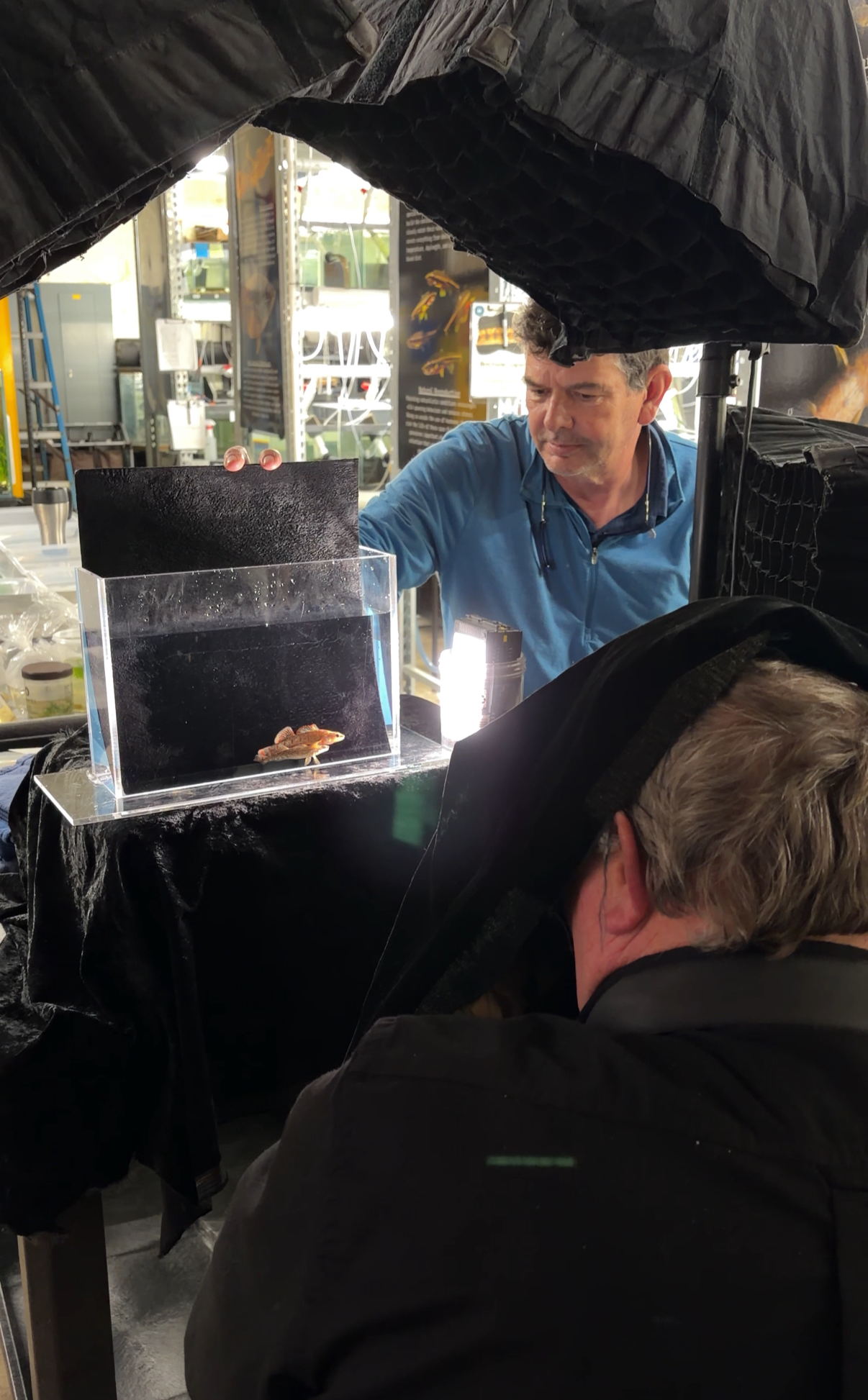
Bo helping Joel photograph Cumberland Arrow Darters
In late May we had another fantastic visit with our friend and National Geographic photographer, Joel Sartore. Joel has been a supporter of Conservation Fisheries for years and has been photographing the fish in our care for his Photo Ark project for just as long. While many of the species in our facility have been here for several years and therefore have already had their headshots taken by Joel, the newest species added to the yearbook this year is the Cumberland Arrow Darter. Joel’s Photo Ark project aims to photograph every species that lives in captivity and to capture the stories of why captivity is necessary for some species and how projects such as ours can ultimately restore the health of wild populations.
Partner Feature
SHOAL
The SHOAL is the global ecosystem of partners and collaborators who work together to safeguard the health of Earth's freshwater habitats and conserve the most threatened freshwater species. As with a shoal of fish, the strength of the SHOAL lies with the number of partners all working together.
Image by SHOAL
SHOAL fills a significant gap in conservation: to deliver urgent and impactful conservation for the world’s most threatened freshwater species. SHOAL’s mission is to halt extinctions and recover populations of the world’s most threatened freshwater fish species. They do this through focusing efforts on three strategic pillars: Inspire, Mobilise, and Act. Shoal’s Hosts are Synchronicity Earth in the UK and Re:wild in the USA. SHOAL works globally, and when they were looking for partnerships with organizations doing freshwater conservation work in the Southeastern United States, they reached out directly to Conservation Fisheries.
Our partnership with SHOAL has put us in touch with and on the radar of a whole new group of supporters and potential donors. Funding organizations that focus their efforts on freshwater and conservation projects have become increasingly vital to our work as Conservation Fisheries looks forward to the future of our restoration efforts. As a first introduction to these organizations, Conservation Fisheries was highlighted in SHOAL’s 2024 Annual Review, showcasing the important work that we do to support biodiversity.
Earlier this month Conservation Fisheries had the pleasure of hosting a group from Re:wild at our facility to show them the hands-on work that we’re doing to support and rehabilitate wild populations of freshwater fish native to the Southeastern United States. In the presence of conservation experts from around the world, we were thrilled to share the important local work that happens here at Conservation Fisheries.
Gratitude
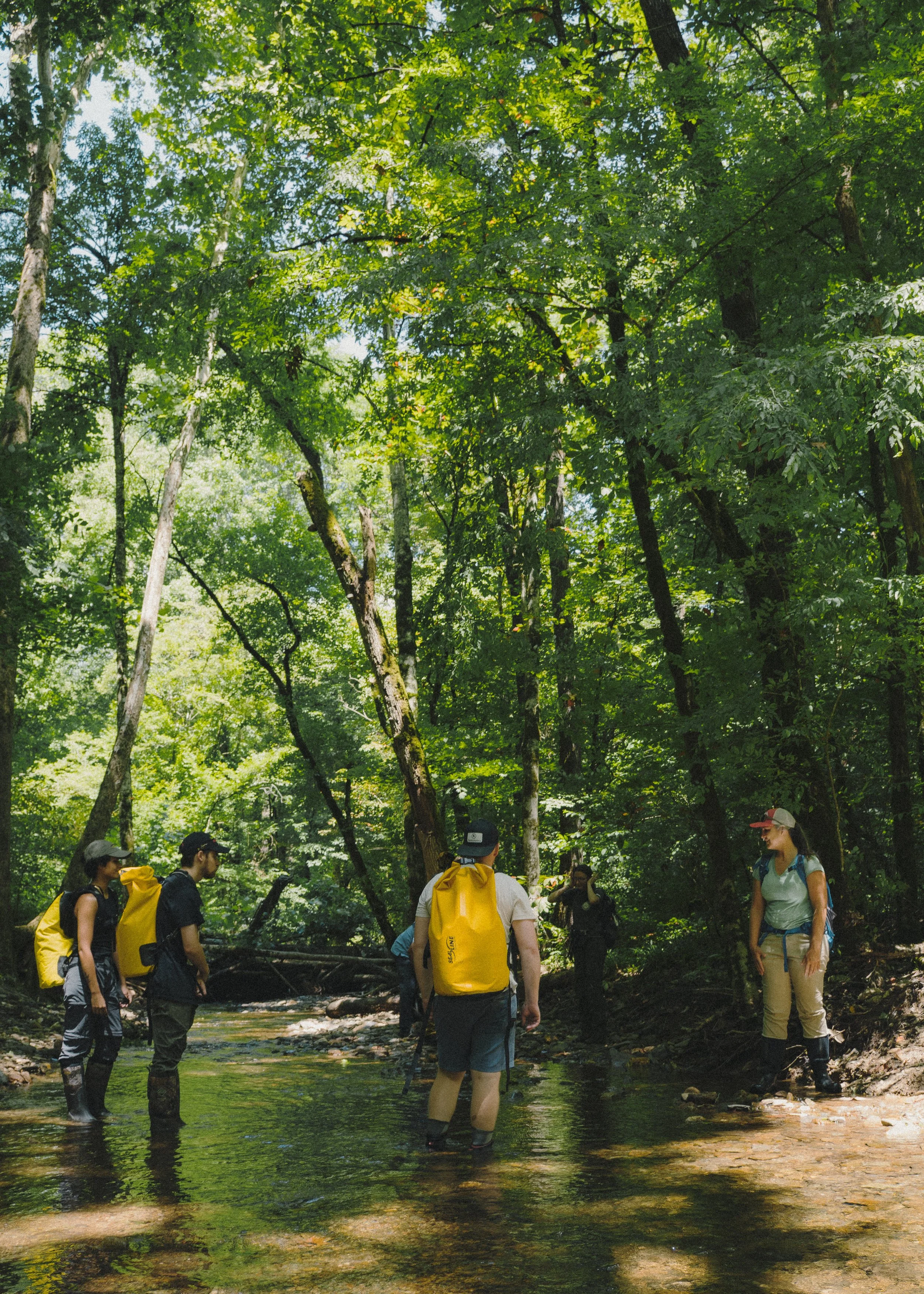
CF and USFS out for a Tennessee Dace release
For the U.S. Forest Service
In our August 2025 Conservation Roundup, our Partner Highlight was the U.S. Forest Service. We have the honor of working with biologists in the Cherokee National Forest that are not only stewards of the land but also have a great interest in restoration of native species in the forest. Many of you are aware that the U.S. Forest Service is undergoing some major changes at this time. Please join us in our support of the hardworking people who care for our forests and the plants and animals who dwell there. There is so much important conservation work that would not be possible without the incredible dedication of Forest Service biologists, and we wholeheartedly support their cause.
Contributions
Many thanks to all of the Conservation Fisheries staff members that contribute ideas for the newsletter as well as photographs of our field and facility work, especially of the beautiful fish that we have the pleasure of working with every day. Much of the information about the Pearl Darter came from Crystal, our Species Lead. Thank you as always to Joel Sartore, who has taken brilliant photographs of our species for years which appear constantly throughout our website and newsletters. Information and photos about outreach and events are thanks to Grace and Aster. Thanks to Bo, who has countless things to do as our Executive Director but will always give feedback on the newsletter draft and fill information gaps wherever they may arise.
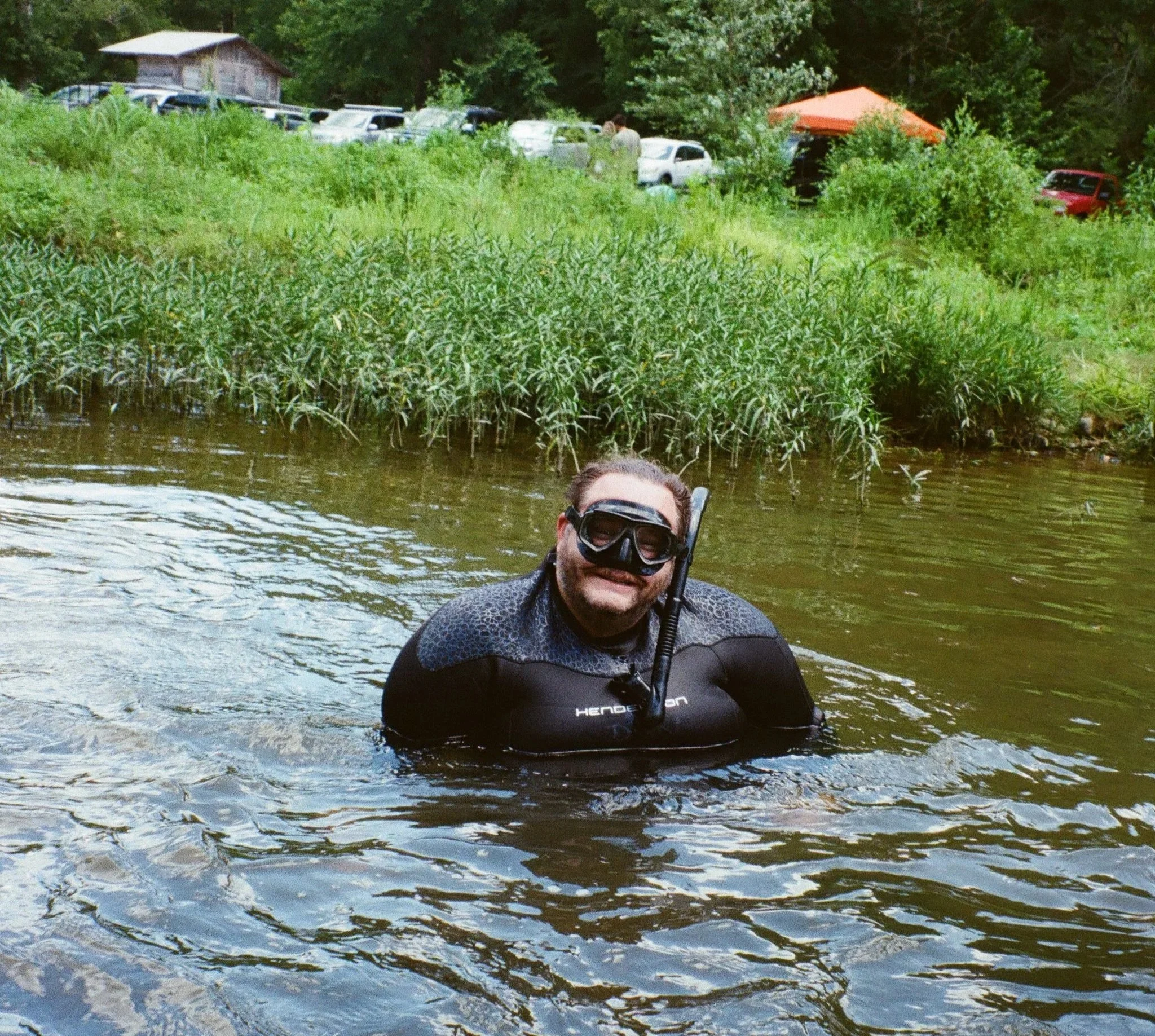
Derek at Little River Community Day - Photo by Aster Treat
Our Community
As always, the biggest thanks to you - the folks who find value in the work that Conservation Fisheries does on a daily basis. If our work speaks to you, please consider a donation to our organization. In times like these, conservation work is more important than ever, and even a small donation makes a big impact. Other support, such as liking our social media posts or stopping by our outreach booths at community events, means the world to us, too. Thank you all for everything.
— The Conservation Fisheries Team