

Conservation Round-Up
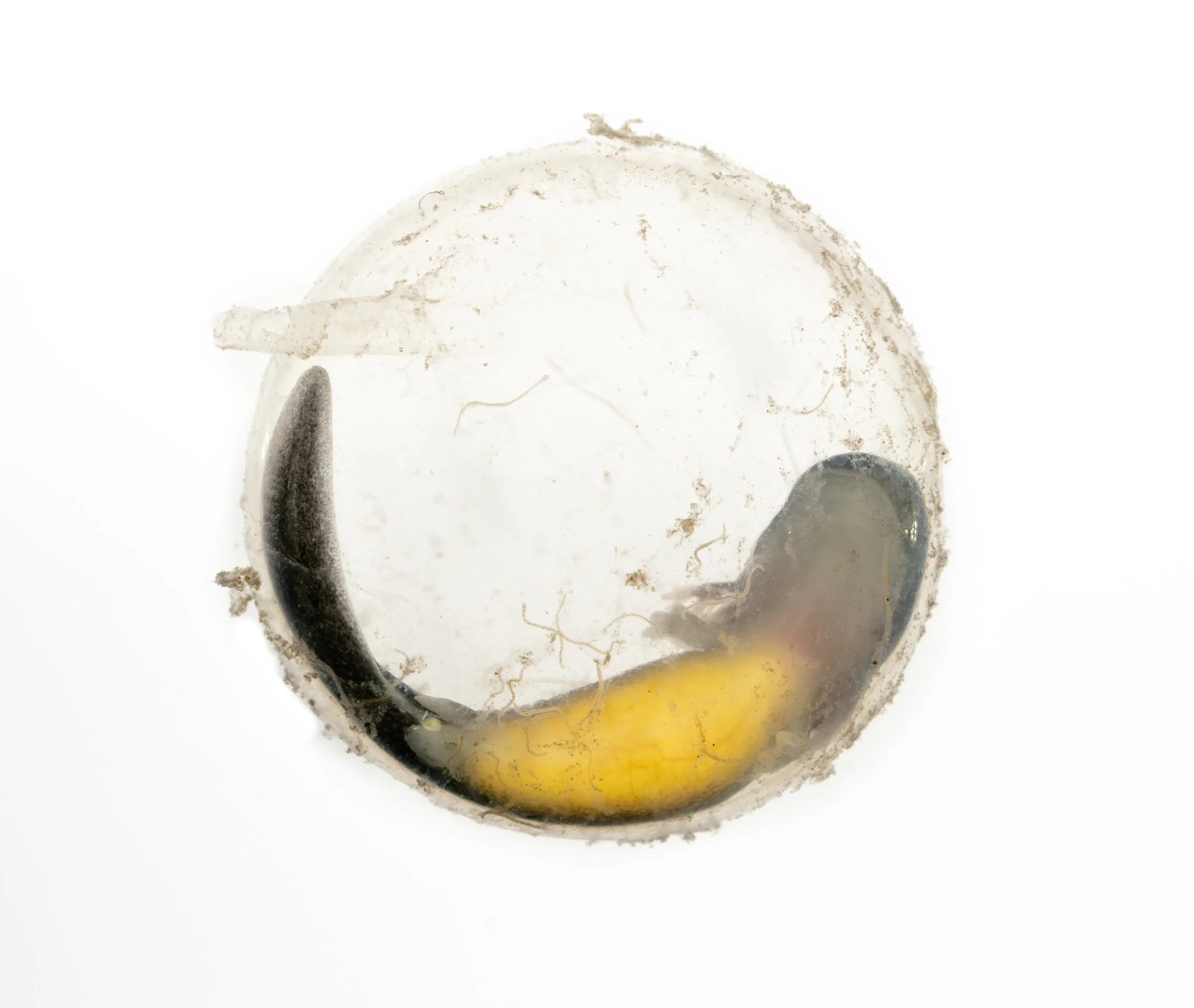
Eastern Hellbender Egg - Photo by Derek Wheaton
Spawning Season is on the Horizon!
Usually the winter feels a little empty here at Conservation Fisheries. The fish that were produced in 2025 all mostly got released in the fall, and often all that remain are broodstock we are overwintering, a few young that will grow up to be broodstock, and our Barrens Topminnow assurance colonies.
This winter has felt very different. With the addition of Eastern Hellbenders to our facility, who spawn in the fall and are rearing at this time of year, we’ve had an exciting winter rearing the young from the eggs we collected last fall. They don’t like it too cold, so our baby hellbenders have been kept on a heater as we’ve lowered the facility temperatures down to mimic winter conditions. This ensures that the fish in our care hit their thermal low, as they would in the wild, before warming back up to begin producing eggs and gametes in preparation for their spawning season.
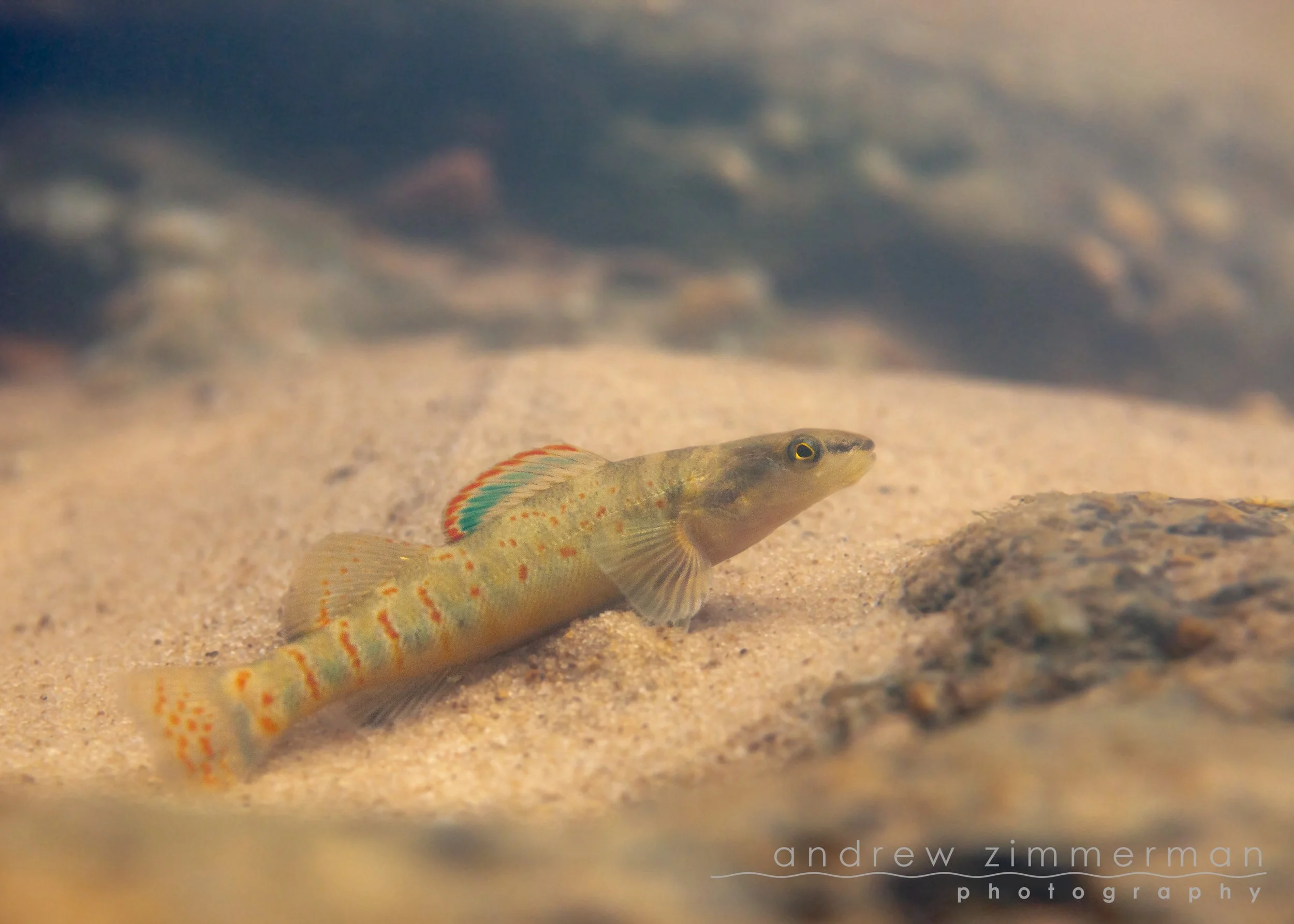
Cumberland Arrow Darter, Etheostoma sagitta - Photo by Andrew Zimmerman
Our Eastern Hellbenders even recently got some new neighbors! While we commonly collect broodstock in the summer or fall seasons, this January we sent a crew to meet our partners at Cumberland Gap National Historical Park (CuGa) and Tennessee Wildlife Resources Agency (TWRA) to collect new broodstock for Blackside Dace and for our newest species, the Cumberland Arrow Darter. While we’ve never worked with Cumberland Arrow Darters before, we did work with their closest relative, the Kentucky Arrow Darter, about a decade ago. This year our biologists will use the generational knowledge from when we worked with Kentucky Arrow Darters to aid us in creating a propagation protocol for the Cumberland Arrow Darter. One thing that we do know about them is that they love the cold! While our facility temperatures are at the aforementioned thermal low for the winter, this species requires being on a chiller to keep their water 5-10 degrees colder than the rest of the fish in our care!
Our biologists have spent the last few months mostly holed up at our desks writing reports, entering notes and data from last year, and waiting patiently for the temperatures to warm up for our favorite time of the year. We look forward to the happy chaos that springtime will bring us, and we can’t wait to share it with you all!
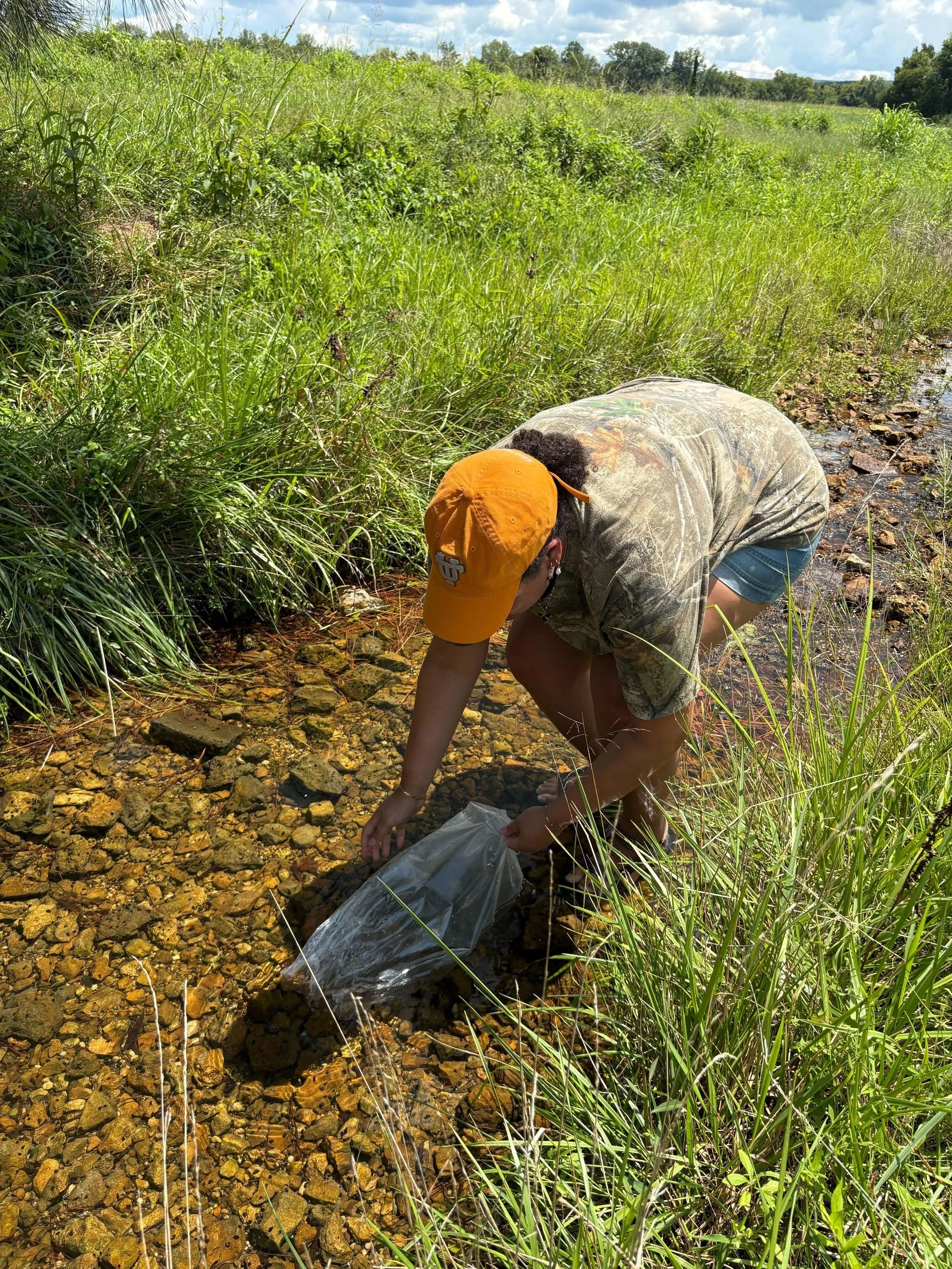
Izabella assisting with a Barrens Topminnow release - Photo by Curt Brewer
Up front we’d like to thank all of our volunteers from 2025! Whether you were here for only one season or are still with us now in 2026, we have been so grateful for the time you have dedicated to our organization and these wonderful fishes. In 2025 we had a total of 1,173 volunteer hours! We are immensely grateful for this support, and truly couldn’t do it without you all.
With the spring season beginning this month our next Volunteer Season will be in the summer from May 2026-August 2026. Applications for this season will open the first week of April and can be found on the Volunteer Program page of our website as well as through our social media pages.
This spring we’re also thrilled to be continuing to offer internship focused volunteer opportunities as an extension of our Volunteer Program in partnership with the University of Tennessee, Knoxville as well as our first semester in partnership with Tennessee Technological University. As we build our Internship Program, students are able to obtain class credit while working at our facilities. Applications for summer intern positions will be sent to professors and announced by them sometime in March or April. Keep an eye out!
Save the Date

February 15th - Beneath the Surface
Join us Sunday, February 15th, 2026 at The Brookside for our annual Winter Dinner, Beneath the Surface! This year we are celebrating 40 years of conservation success. Together we will look back on the stories, people, and achievements that have shaped our journey, and look ahead to all that’s still possible.
We’ll enjoy a delicious meal from Knoxville’s own Tarik’s North African and hear from keynote speaker Emily Graslie who will help us celebrate this remarkable 40-year milestone. We can’t wait to gather with you for an evening full of community, gratitude, and hope as we continue supporting our rivers beneath the surface, one bite at a time.
Ticket information is here! And don’t miss out! We have fewer than 10 seats left available for our event. If you wait to buy your tickets at the door, they may already be sold out!
Species Spotlight
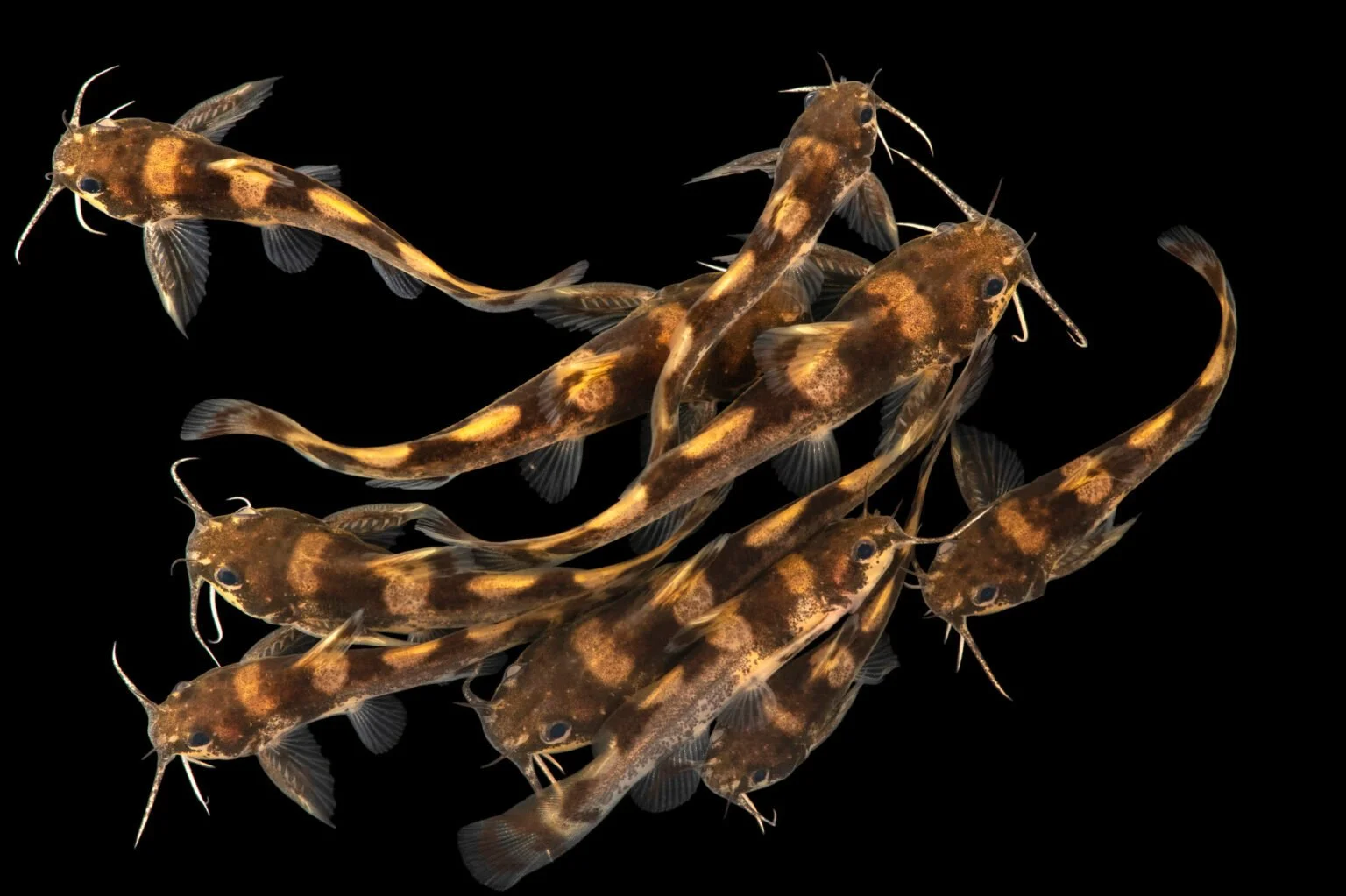
Carolina Madtom, Noturus furiosus - Photo by Joel Sartore
Carolina Madtom - Noturus furiosis
Introducing the biggest catfish that Conservation Fisheries has in our facility…the Carolina Madtom!
Madtoms are a small catfish species exhibiting barbell whiskers and venomous dorsal and pectoral fin spines similar to their bigger relatives. Like other catfish, Carolina Madtoms are cavity spawners, meaning they seek out a hollowed out area under a rock or other structure when looking for a spawning territory. Once hunkered down, males will seek out a female to lay eggs within their cavity, and then, because Carolina Madtoms are such excellent dads, will kick out the female and care for the nest on his own until the eggs hatch.
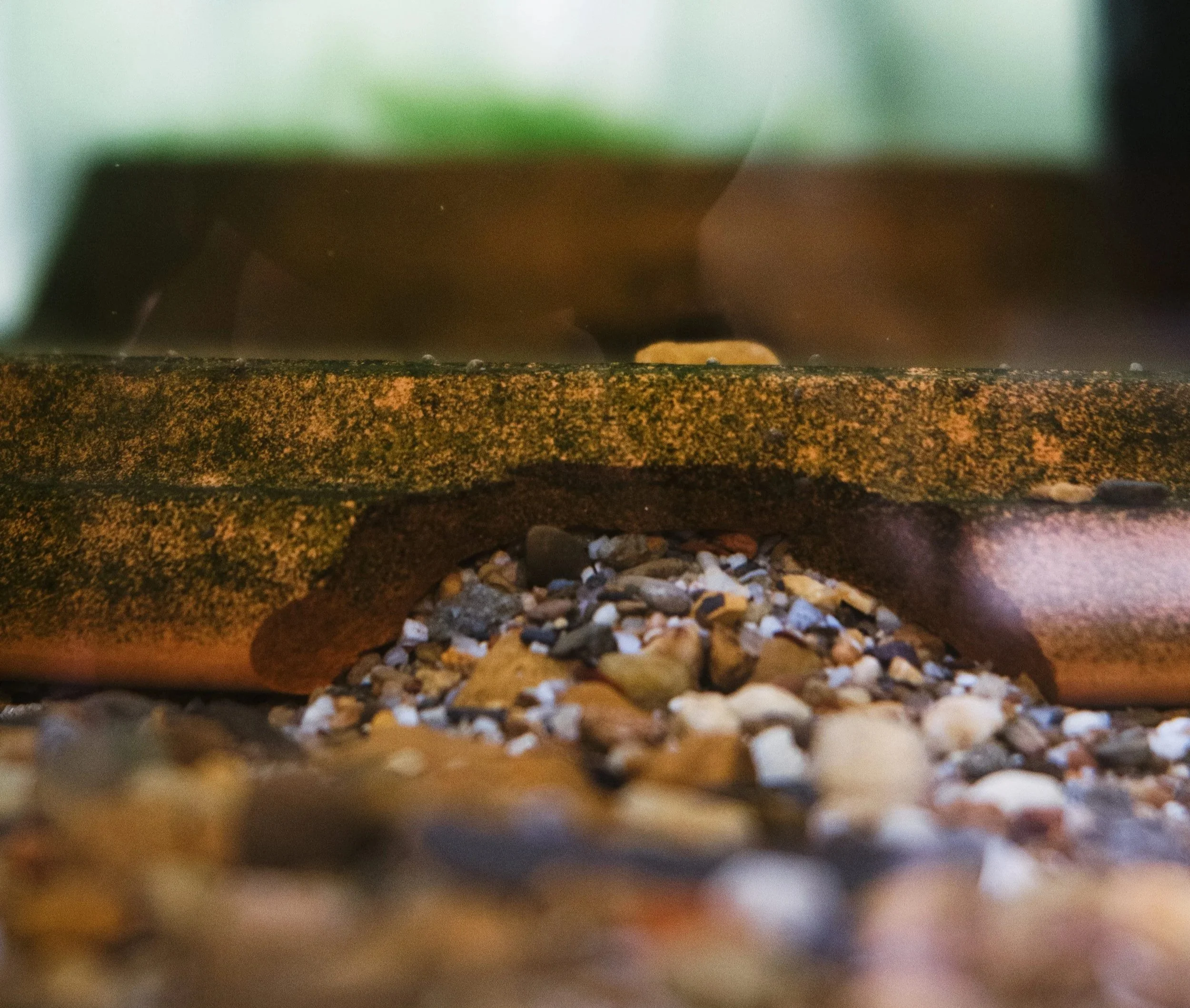
Walled Carolina Madtom spawning habitat - Photo by Aster Treat
To mimic these cavities in our facility, we use plant-pot saucers placed upside down with an opening cut into the side. After observing this mating ritual in our facility, we noticed that the males will actually wall themselves (and the female during spawning) into the cavity by pushing substrate from inside the saucer in front of the opening. This behavior, along with whether or not we can see the female hunkered down somewhere else in the tank, allows us to estimate the age of the egg nest within the cavity and wait long enough for the male to nurture and groom the eggs before removing the nest and allowing the eggs to hatch out safely in an incubation container. If we wait too long and the nest hatches within the confines of a tank, the male may decide he’s pretty hungry and snack on his little babies! He has been walled up in that cavity, hardly eating for a couple of weeks, you know.
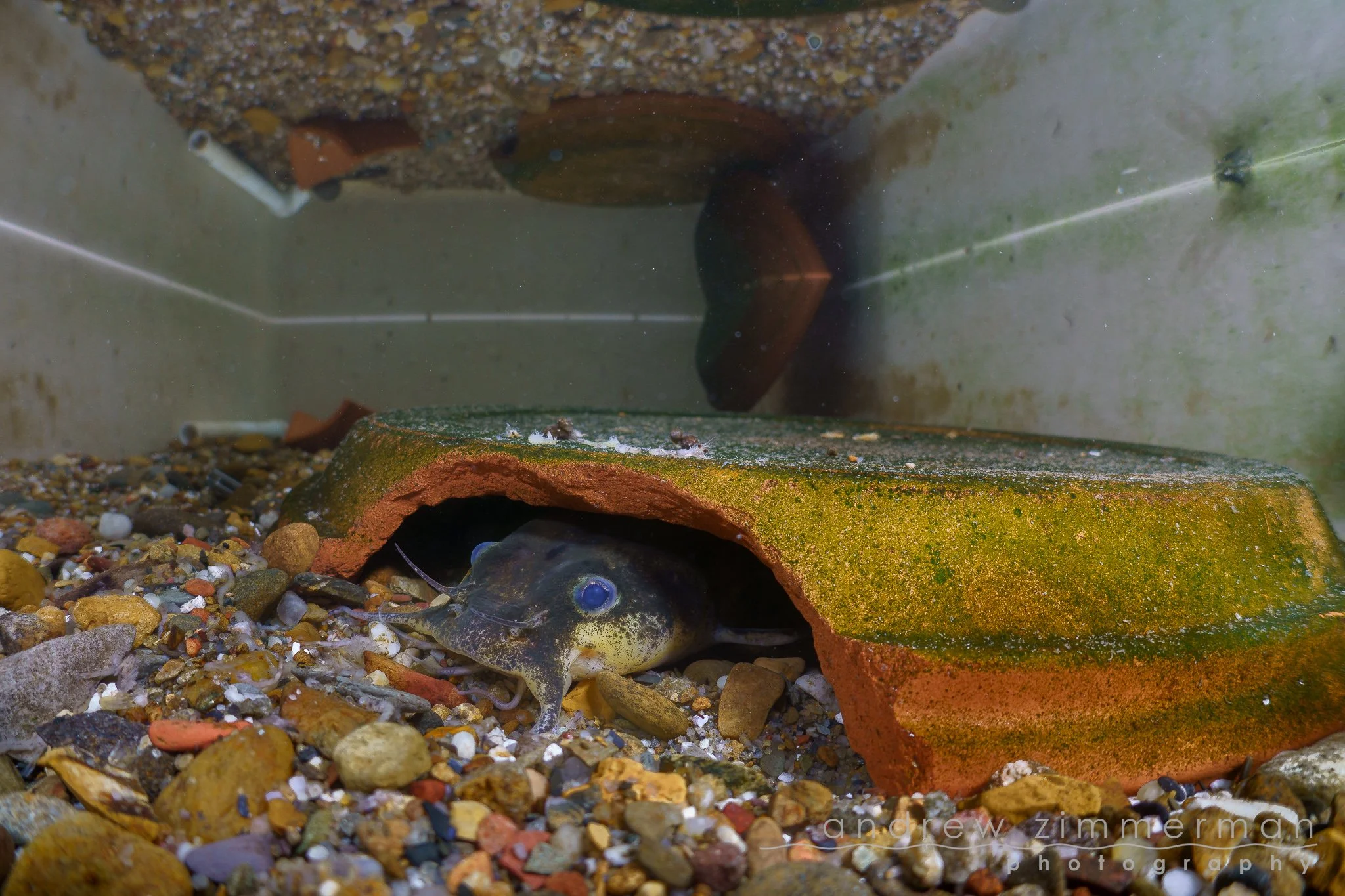
Carolina Madtom hunkered down in a spawning cavity - Photo by Andrew Zimmerman
Our project with Carolina Madtoms began in 2018 after surveys spanning nearly two decades by the North Carolina Wildlife Resources Commission (NCWRC) showed that their populations were declining in their native ranges within the Piedmont and Coastal Plains regions of eastern North Carolina, where they are an endemic species. Having worked with several madtom species in the past we originally obtained funding by the National Fish and Wildlife Foundation to propagate the species for restoration. We were pleased right away to see good production and survivorship numbers. The success with propagating the species came at a great time, because in 2021 Carolina Madtoms were officially listed as Endangered under the Endangered Species Act. While it’s a bummer to have a species listed while we are actively trying to restore their wild populations, we are glad for the legal protections that the ESA offers.
In 2020 a paper by Cope et. al was published discussing the genetic structure of Carolina Madtoms sampled between 2001 and 2017, and results found that genetic diversity was relatively low in the species. This, along with conversations with our partners, has led to more closely following broodstock in our facility to manage for an increase in genetic diversity of the propagated young that are released into the wild populations. We look forward to continuing our propagation efforts for Carolina Madtom restoration in partnership with the NCWRC and the U.S. Fish and Wildlife Service.
Community Outreach
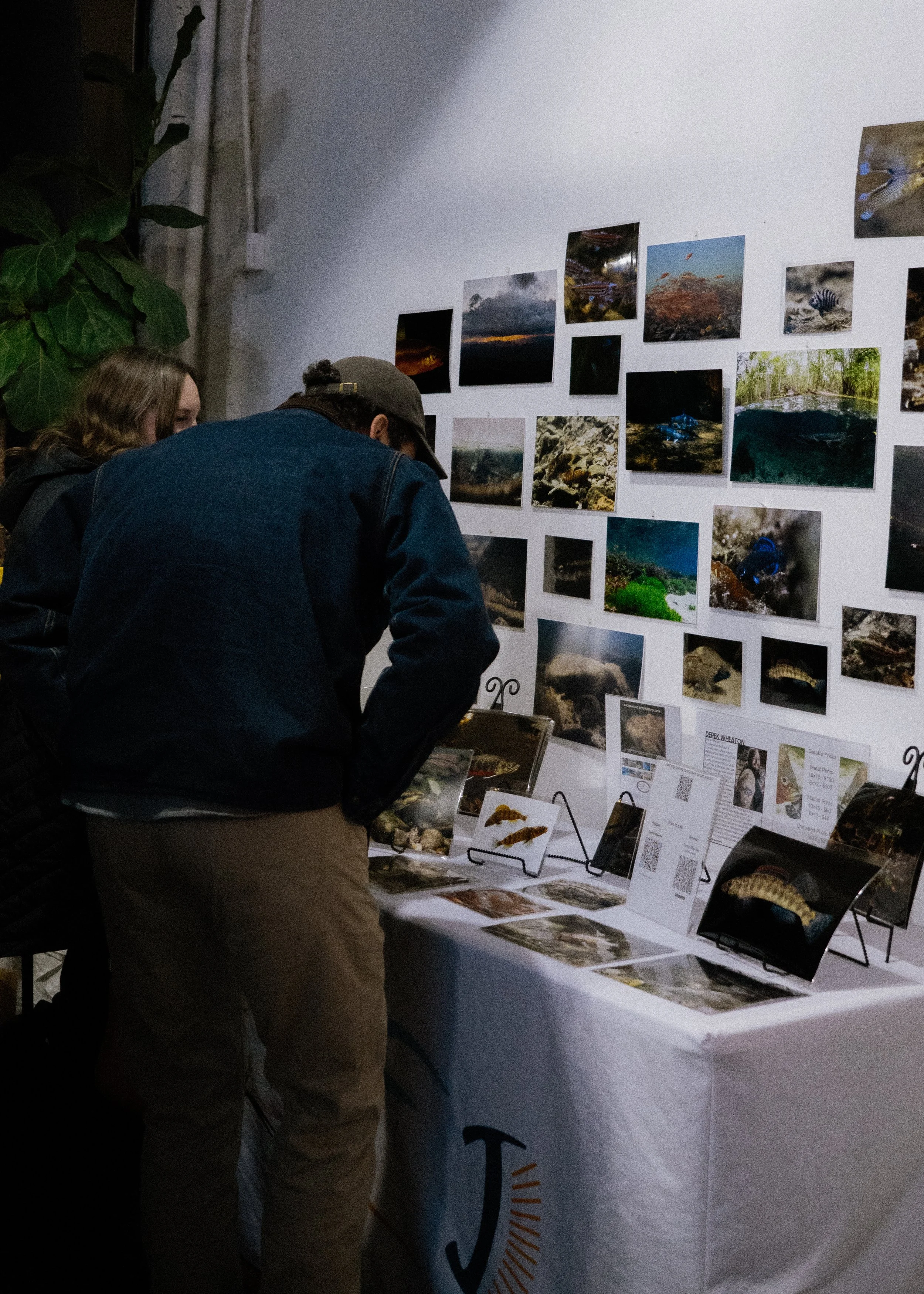
Streamside Art Gallery - Photo by Aster Treat
Streamside Art Gallery
In December we hosted our third annual art gallery, entitled Streamside, at Ironwood Studios here in Knoxville. The gallery featured photography, mixed media, and more from Conservation Fisheries biologists and our talented friends! Many thanks to all of our artists: Andrew Zimmerman, Aster Treat, Ashlee Mays, Bailey Fritz, Enchanting Ectotherms, Green Heron Creations, Hannah Stokes, Logan Szymanowski, and Madisen Saunders.
Streamside was a huge success and we look forward to another one late this year!
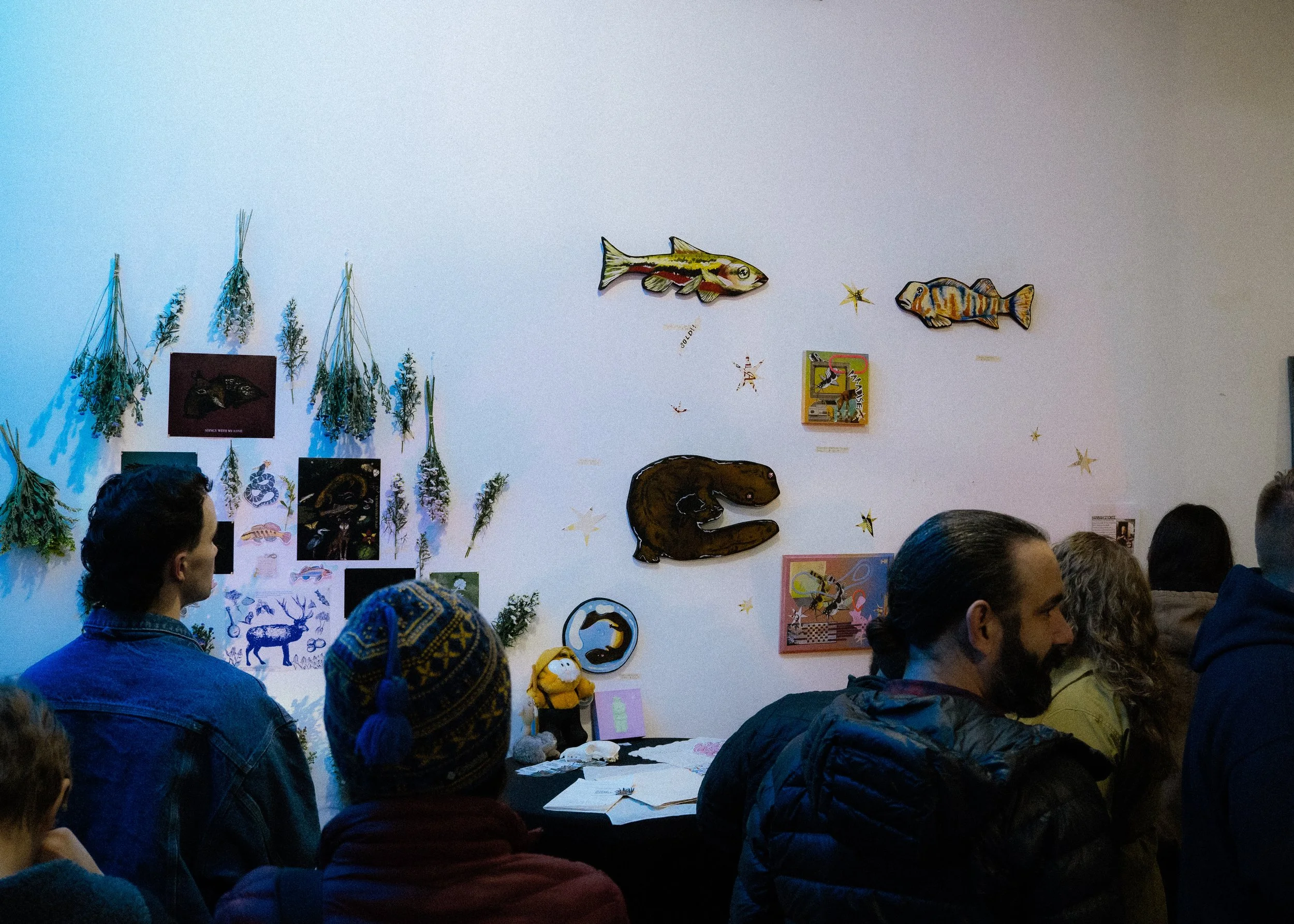
Streamside Art Gallery - Photo by Aster Treat
Conservation Fisheries was glad to be out in Townsend for the Little River Run 5K, where our team tabled at the event, shared our mission, and connected with runners and community members. We also sold CF merch in support of our work. Adding to the fun, one of our founders, Pat Rakes, took part in the 5K! Thanks to the Little River Watershed Association for a great day!
Giving Day Success
Thanks to everyone who contributed to Giving Day 2025 or otherwise sent end-of-the-year donations our way! As a non-profit organization we are extremely appreciative for any donated funds to help us out with various aspects of our work. With the donations we received around that time we are much closer to purchasing a new (to us) field vehicle!
Season Highlights
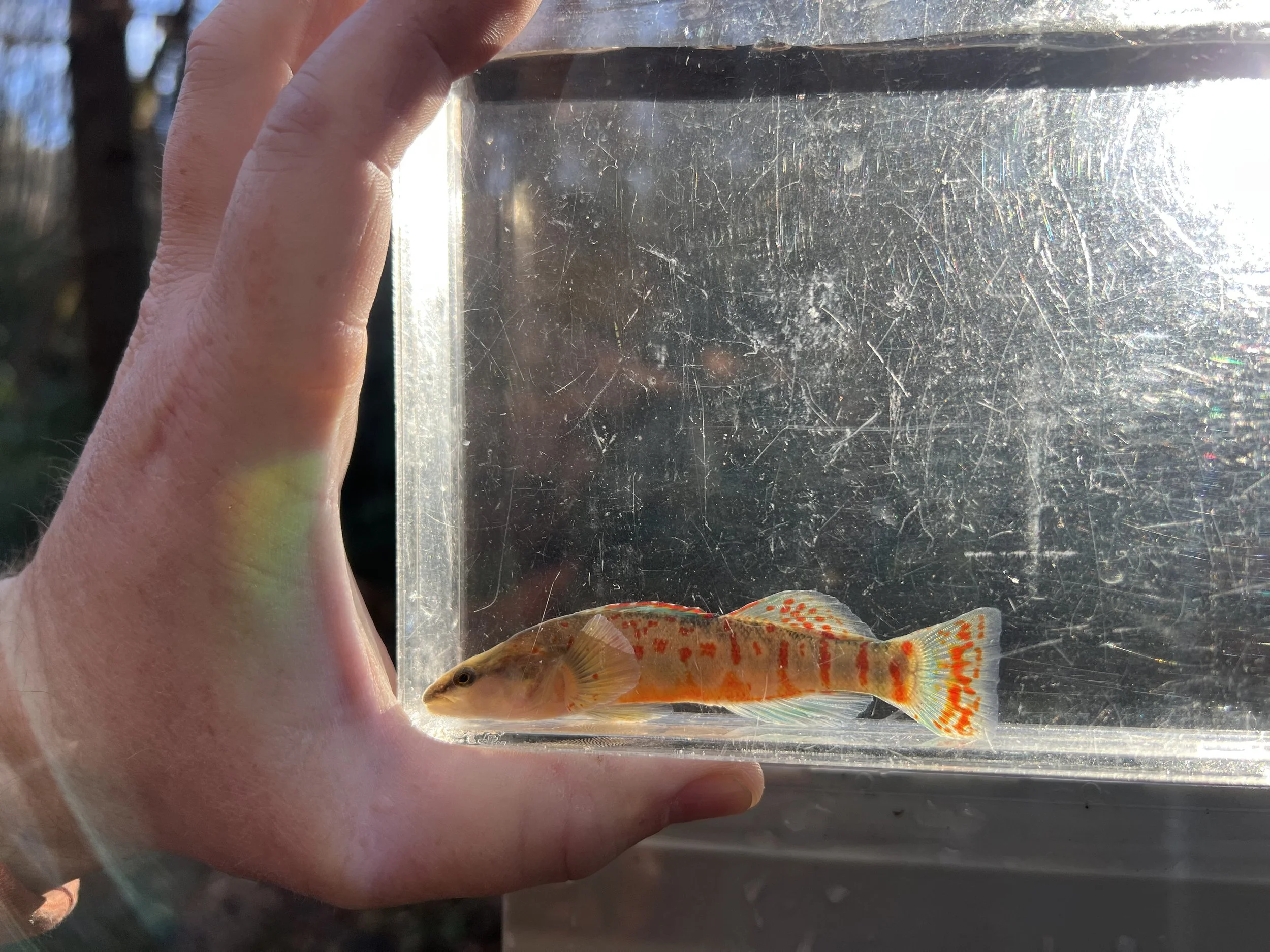
Cumberland Arrow Darter, Etheostoma sagitta (male) - Photo by Conservation Fisheries
Collecting Blackside Dace and Cumberland Arrow Darters
Conservation Fisheries’ first field day of 2026 was a trip to Cumberland Gap National Historical Park where the Blackside Dace and the Cumberland Arrow Darter reside. While the park is open to the public, you likely won’t be running into these fish very easily. Our field site was a 20 minute drive from the Visitor’s Center and another 20-30 minutes on Utility Terrain Vehicles. This type of field day is a great example that we couldn’t possibly do all that we do without the aid and support of our partners (in this case TWRA biologists and the staff and volunteers at CuGa), who not only show up, but show up with expertise, equipment, and a great attitude that makes for an extremely fun field day.
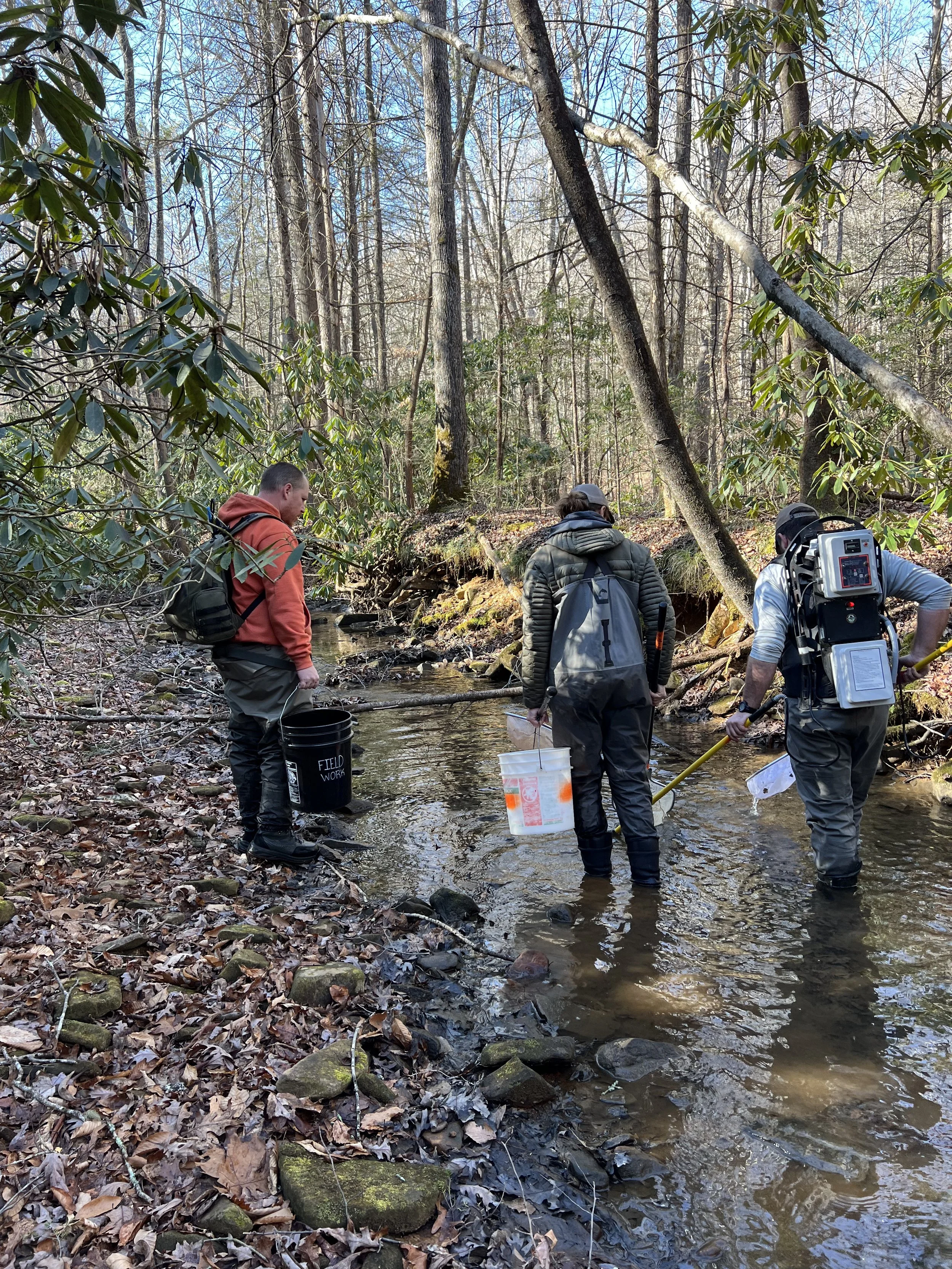
Cumberland Arrow Darter and Blackside Dace collection - Photo by Conservation Fisheries
Our collection efforts were a success! We brought back enough fish to supplement our current Blackside Dace to create a new group of broodstock as well as the first Cumberland Arrow Darters to ever grace our facility. The Cumberland Arrow Darters will be one of our first spawners of the year, beginning around early March, and so are currently being held on a chiller to keep them in temperatures as cold as their wild habitat, which is colder than where we are holding our facility at this time. These cooler temperatures will keep the fish from spawning prematurely and allow for a proper “warm up” to allow them to slowly warm up into their reproductive season. The Blackside Dace, while not on a chiller and currently in water a little warmer than their wild environment, ate late spring spawners, so are not at risk of spawning pre-maturely at this temperature.
Watching the Hellbenders Grow
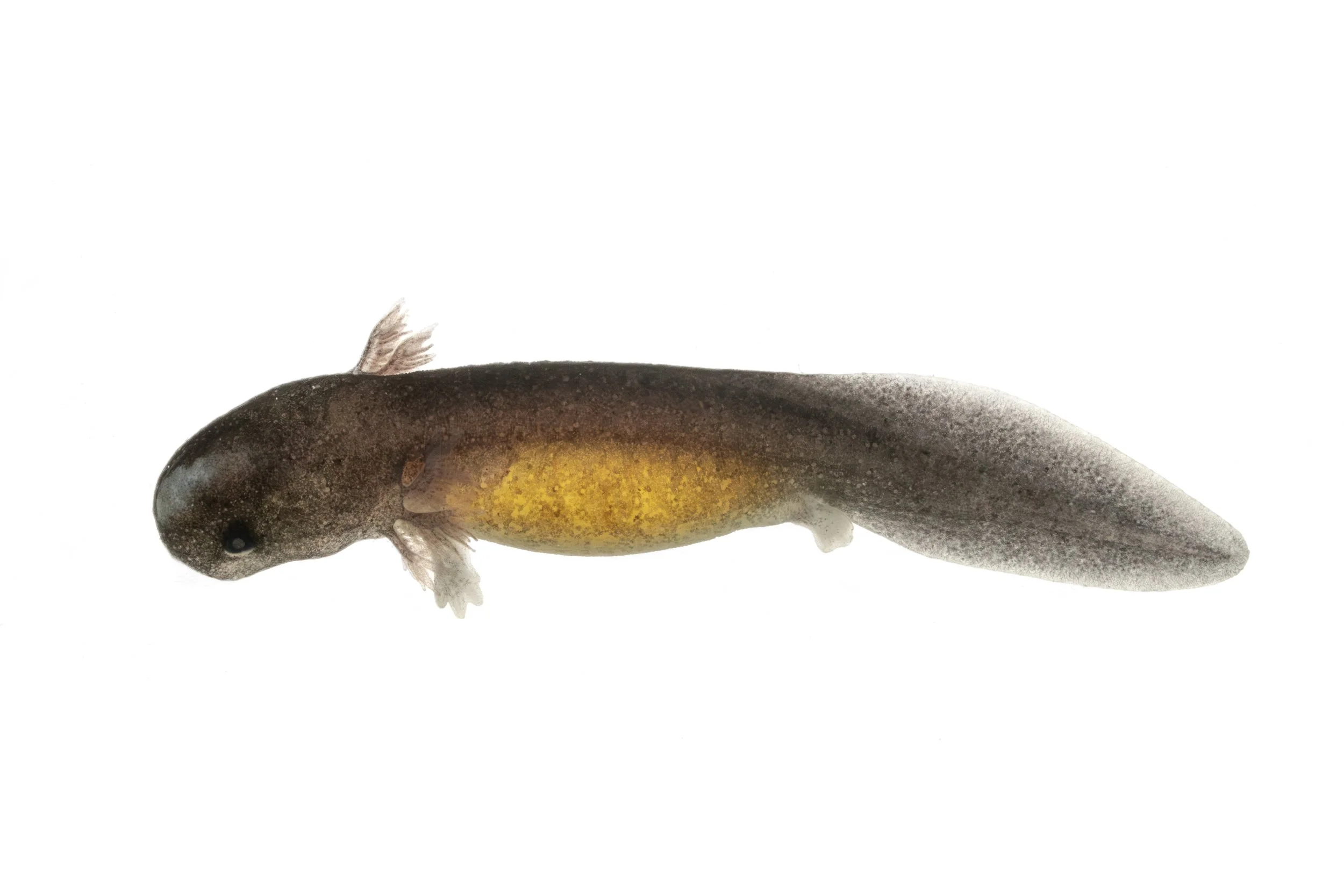
Eastern Hellbender yolk sac larvae - Photo by Derek Wheaton
In October 2025 we had the opportunity to collect wild Eastern Hellbender eggs with our partners in the Cherokee National Forest to try our hand at hatching and rearing the young in our facility. Within the first several weeks all of our healthy eggs hatched with only one bad egg in the clutch. These eggs were much bigger than the fish eggs we usually deal with, but with the aid and knowledge of several institutions already participating in Hellbender restoration efforts (Chattanooga, Nashville, and St. Louis Zoos), we felt confident about our ability to work with them.
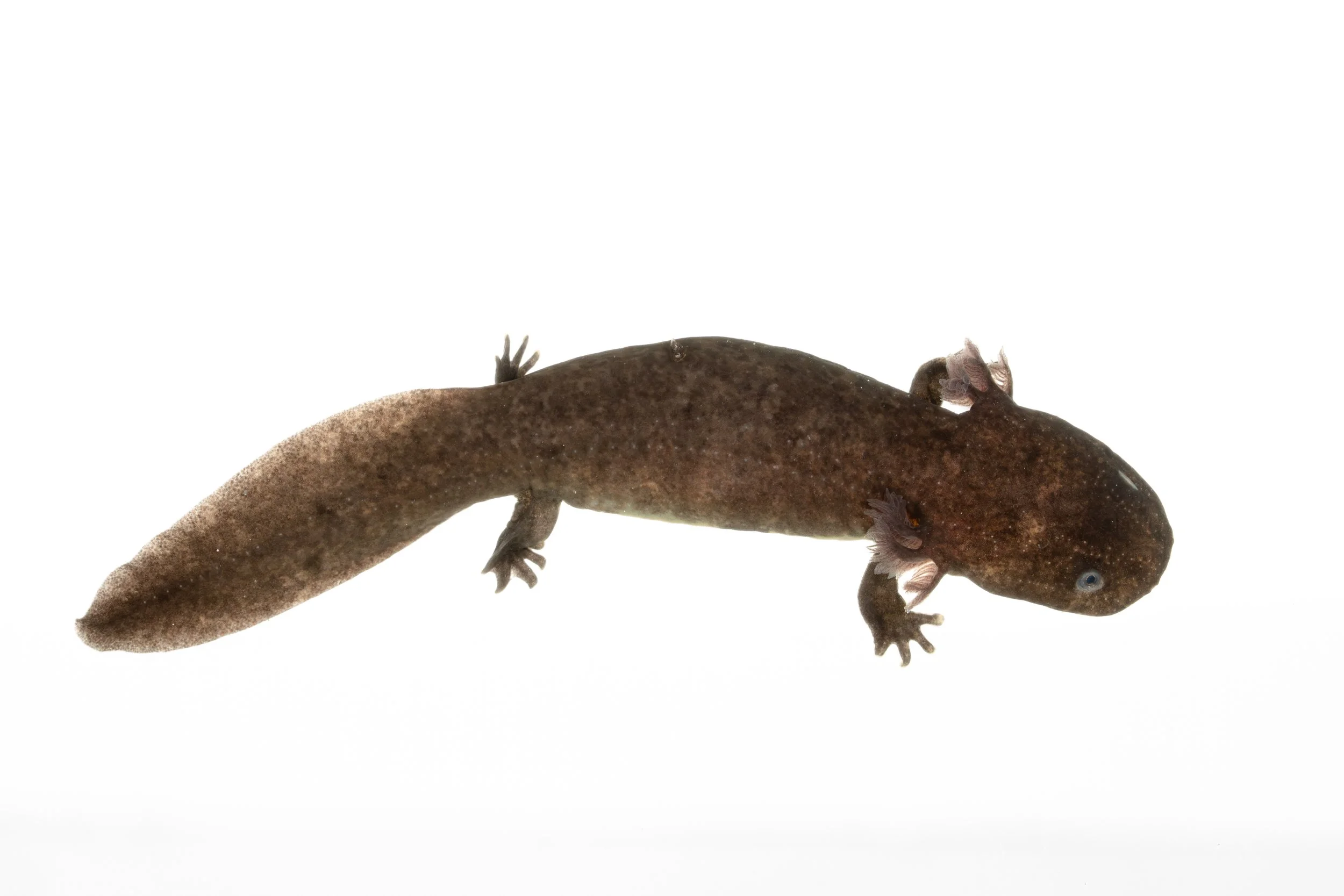
Larval Eastern Hellbender - Photo by Derek Wheaton
Watching the Hellbenders hatch and grow has been an incredible and rewarding experience to say the least. While we are used to seeing most of our fish species hatch out looking like not much but a wiggly translucent line with small dots for eyes, Hellbenders hatch out much more developed! Similar to some of our fish species, they don’t absorb their yolk sacs immediately upon hatching and don’t need to be fed until it’s gone, which is much longer than we are used to. However, soon after they started growing little legs and wiggling their cute little toes, we started testing them on food and they shortly became quite ravenous eaters!
Our biologists have had such a great time experiencing this species in our facility, and a huge thanks to Crystal and Ayana who are meticulously caring for and feeding them. We look forward to observing the rest of their development!
Partner Feature
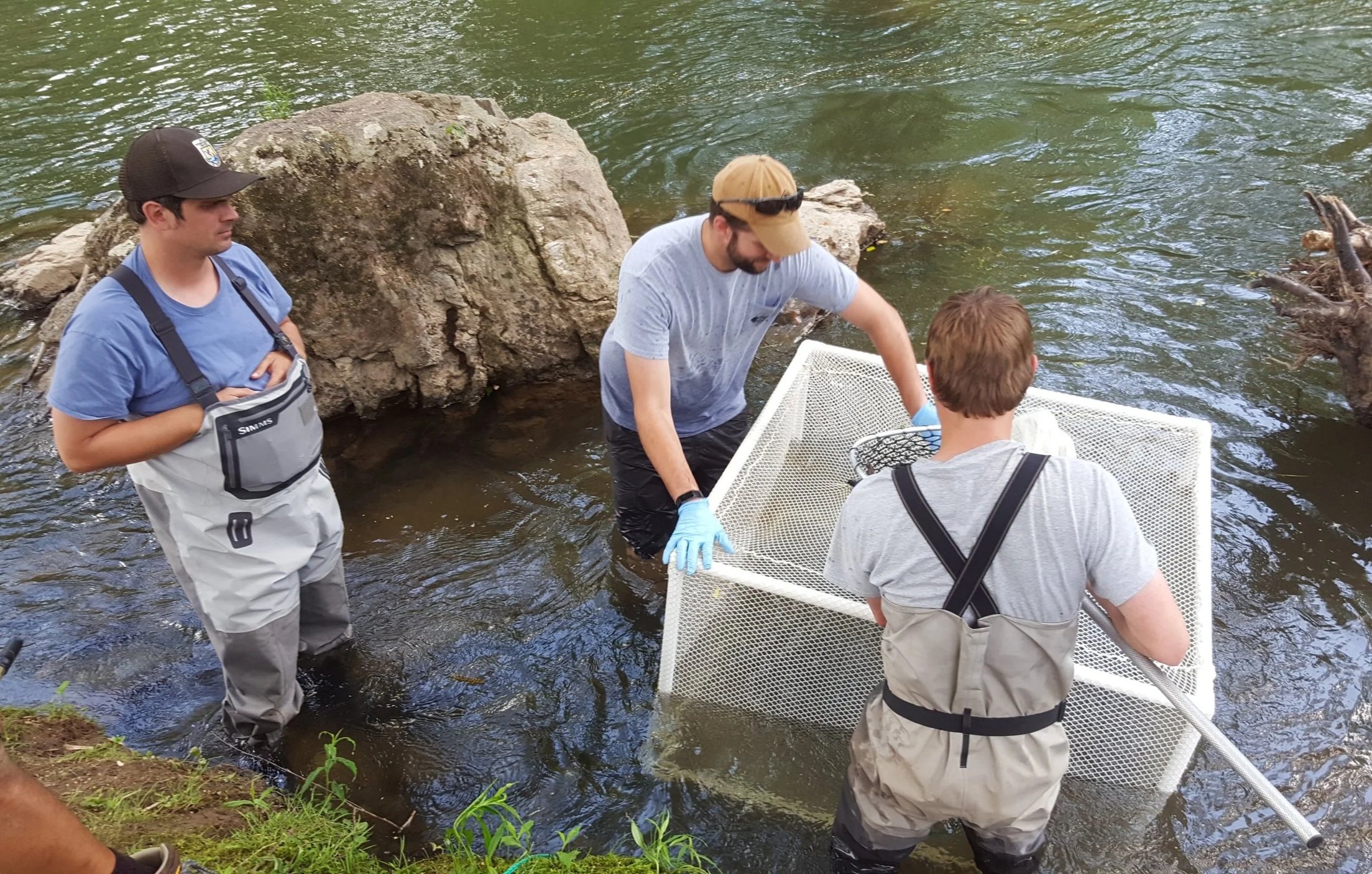
NCWRC biologists during our Sicklefin Redhorse project - Photo by Conservation Fisheries
The North Carolina Wildlife Resources Commission (NCWRC) is a state government agency that conserves and sustains the state’s fish and wildlife resources through research, scientific management, wise use and public input. The NCWRC is the regulatory agency responsible for the enforcement of North Carolina’s fishing, hunting, trapping and boating laws. Their mission is to conserve North Carolina’s wildlife resources and their habitats and provide programs and opportunities that allow hunters, anglers, boaters and other outdoor enthusiasts to enjoy wildlife-associated recreation.
Conservation Fisheries has been working in partnership with NCWRC for over two decades working with species such as Sicklefin Redhorse, Olive Darters, Banded Sculpin, Blotchside Logperch, and Spotfin Chub. Two of our current projects are funded in part by NCWRC: Roanoke Logperch and Carolina Madtoms. Our original work with the Eastern Hellbender, before we began rearing them, was to supply NCWRC with environmental DNA equipment to determine where the hellbenders may or may not still be after Hurricane Helene. Their findings will help to determine where a post-Helene Hellbender recovery project would have merit.
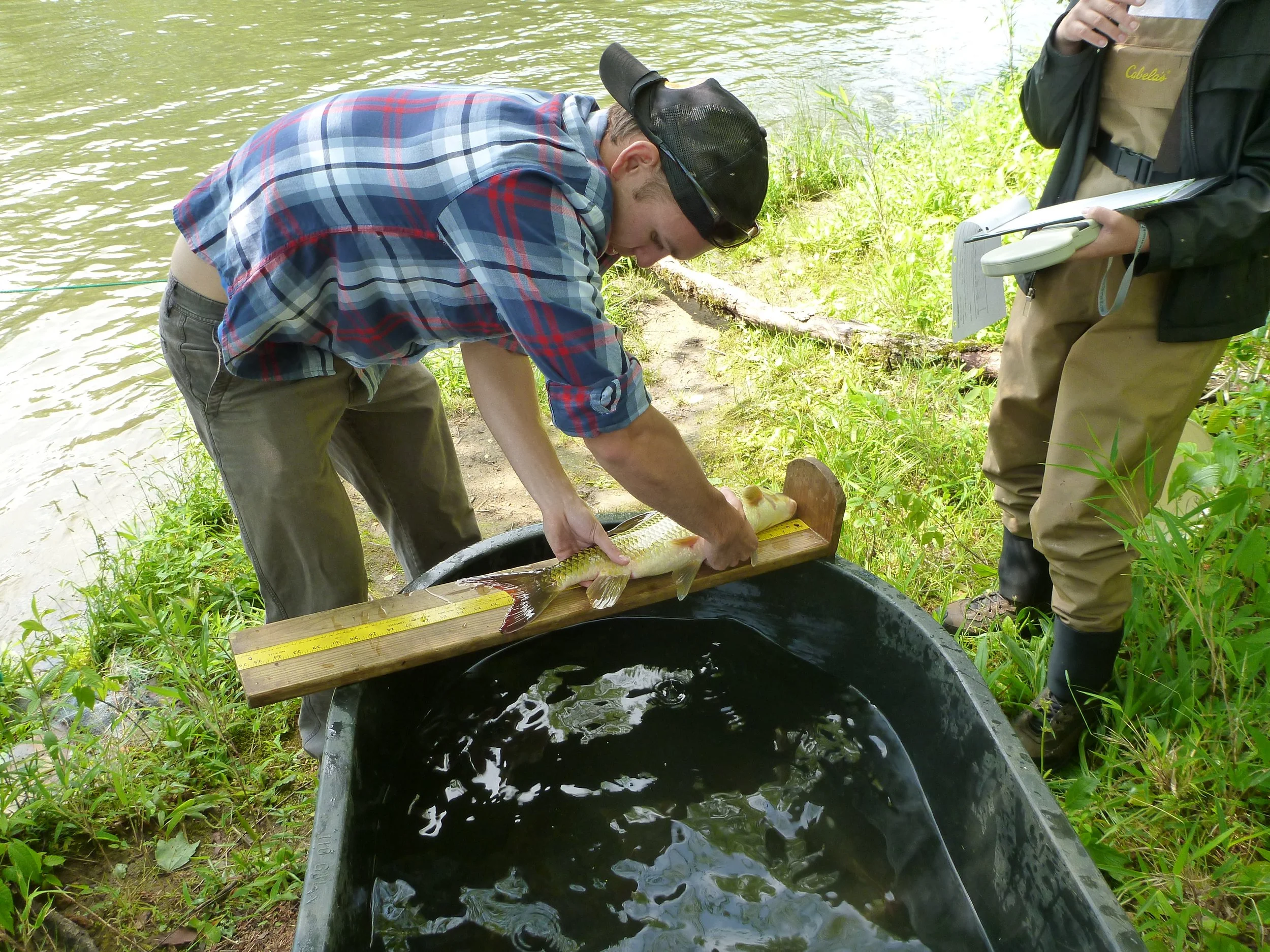
Measuring Sicklefin Redhorse, Moxostoma sp. - Photo by Conservation Fisheries
While many of the projects that Conservation Fisheries works on include broodstock collection, propagation, release, and monitoring, some of the projects we have with NCWRC are propagation only, such as for the Carolina Madtoms and the Roanoke Logperch. NCWRC biologists will support these projects by collecting broodstock and transferring them to our facility for propagation. When the young are big enough to release, instead of travelling to release them ourselves we will transfer them to North Carolina’s Marion Fish Hatchery for them to temporarily be held until their biologists can initiate the release. Following these releases, the NCWRC also manages the survey effort for the species.
We are so appreciative of the conservation efforts of the North Carolina Wildlife Resources Agency and are proud to work with them on these important projects!
Gratitude
Contributions
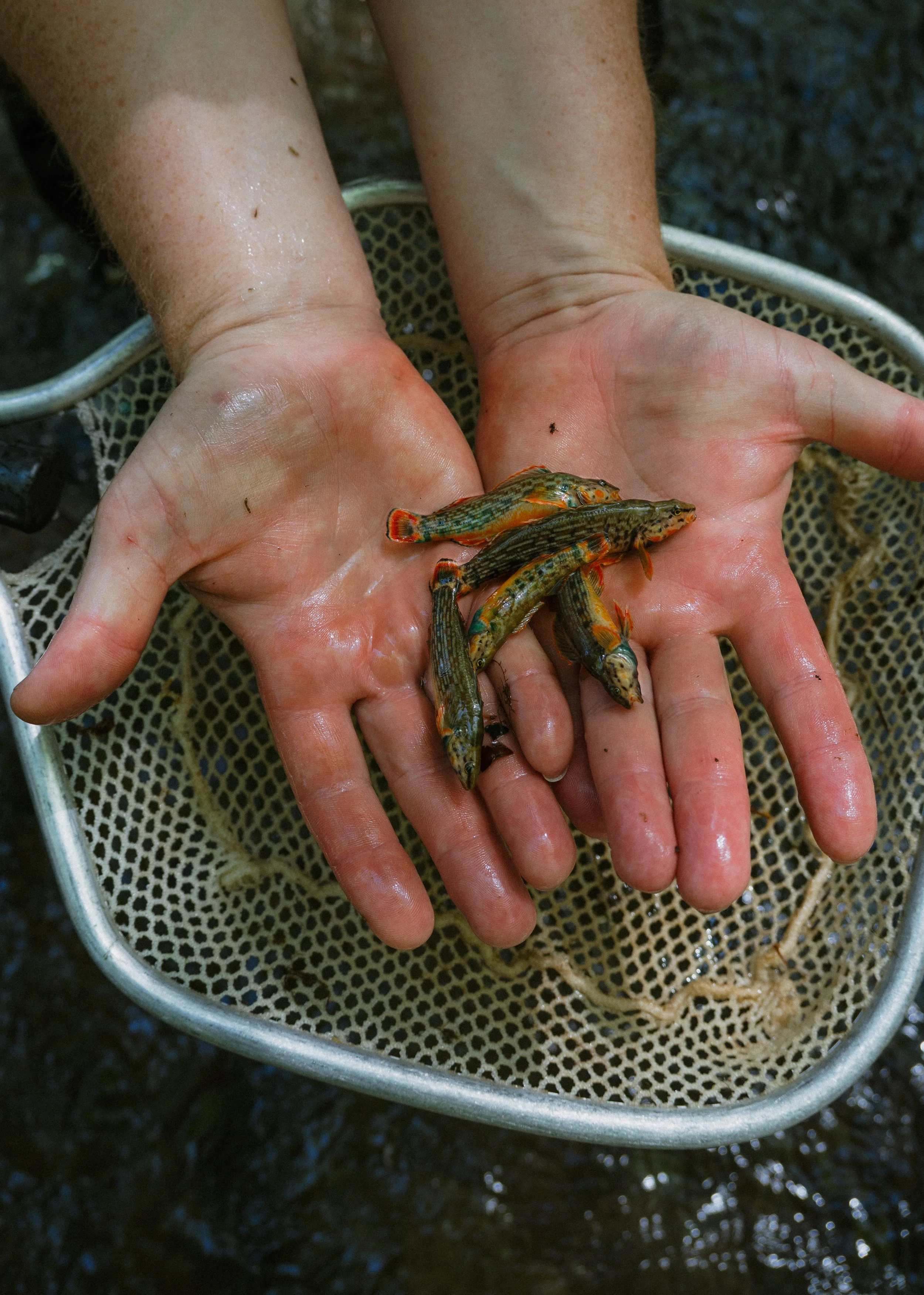
Redline Darters, Nothonotus rufilineatum
Many thanks to all of the Conservation Fisheries staff members that contribute ideas for the newsletter as well as photographs of our field and facility work, especially of the beautiful fish that we have the pleasure of working with every day. This season we are particularly grateful to Derek who has been documenting the Eastern Hellbender life stages. Thank you as always to Joel Sartore, who has taken brilliant photographs of our species for years which appear constantly throughout our website and newsletters. Information and photos about outreach and events are thanks to Marley and Aster. Information about our partnerships is thanks to Missy. Thanks to Bo, who has countless things to do as our Executive Director but will always give feedback on the newsletter draft.
Gratitude
As always, the biggest thanks to you - the folks who find value in the work that Conservation Fisheries does on a daily basis. If our work speaks to you, please consider a donation to our organization. In times like these, conservation work is more important than ever, and even a small donation makes a big impact. Other support, such as liking our social media posts or stopping by our outreach booths, means the world to us, too. Thank you all for everything.
- The Conservation Fisheries Team
